

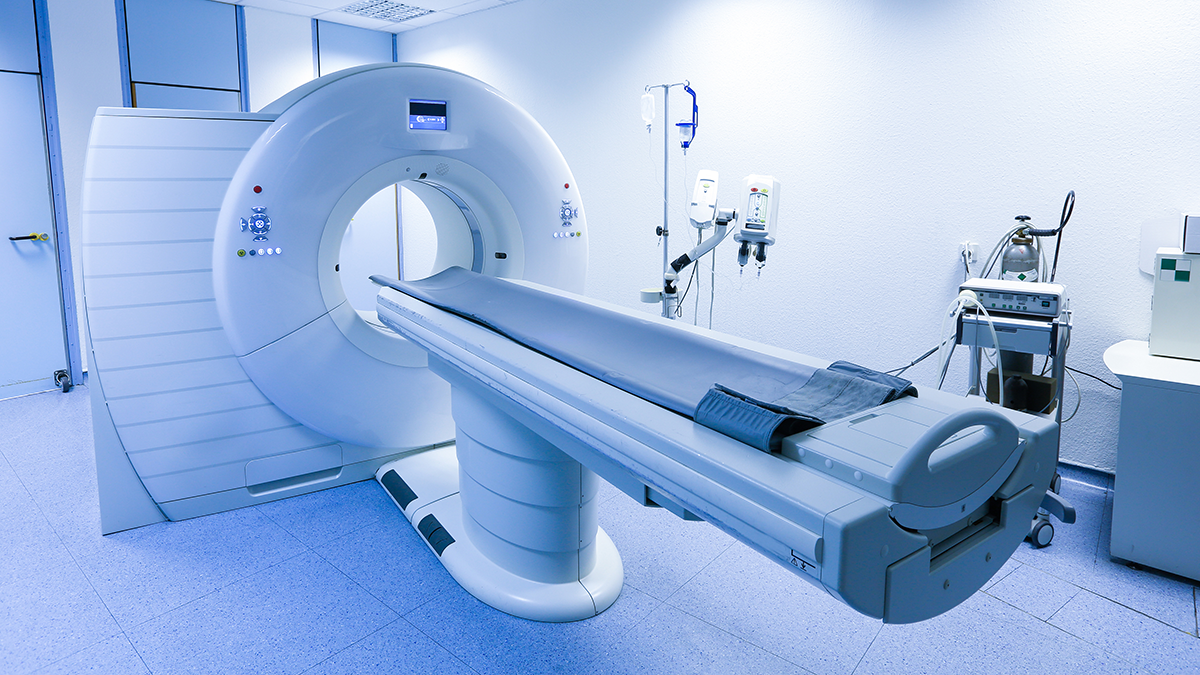
A retrospective study of North American children and adolescents published in the New England Journal of Medicine suggests an association between exposure to radiation from medical imaging and a small but significantly increased risk of hematologic cancer.
The study followed a retrospective cohort of 3,724,623 children born between 1996 and 2016 in six US healthcare systems and Ontario, Canada. The children were tracked until they reached the earliest of cancer or benign-tumor diagnosis, death, end of healthcare coverage, or an age of 21 years, up to the cutoff of December 31, 2017. The mean duration of follow-up was 10.1 years per child.
After quantifying each child’s radiation doses to active bone marrow from medical imaging, the researchers used continuous-time hazards models to estimate the associations between hematologic cancers and cumulative radiation exposure (versus no exposure), with a lag of six months.
A total of 2961 hematologic cancers were diagnosed, primarily lymphoid cancers (2349 [79.3%]), myeloid cancers or acute leukemia (460 [15.5%]), and histiocytic- or dendritic-cell cancers (129 [4.4%]).
The mean (±SD) exposure among children exposed to at least 1 mGy was 14.0±23.1 mGy overall (for comparison, 13.7 mGy was the exposure from one computed tomographic [CT] scan of the head) and 24.5±36.4 mGy among children with hematologic cancer.
The risk of cancer increased with cumulative dosing, with a relative risk (versus no exposure) of 1.41 for 1 to less than 5 mGy, 1.82 for 15 to less than 20 mGy, and 3.59 for 50 to less than 100 mGy. The excess cumulative incidence of hematologic cancers by 21 years of age among children exposed to at least 30 mGy (mean, 57 mGy) was 25.6 per 10,000.
The cumulative radiation dose to bone marrow was associated with an increased risk of all hematologic cancers (excess relative risk per 100 mGy, 2.54 [P= <0.001]; relative risk for 30 vs. 0 mGy, 1.76) and most tumor subtypes.
“We estimated that, in our cohort, 10.1% (95% CI, 5.8 to 14.2) of hematologic cancers may have been attributable to radiation exposure from medical imaging, with higher risks from the higher-dose medical-imaging tests such as CT,” the authors wrote.
Reference
Smith-Bindman R, Alber SA, Kwan ML, et al. Medical imaging and pediatric and adolescent hematologic cancer risk. N Engl J Med. 2025;393(13):1269-1278. doi:10.1056/NEJMoa2502098