
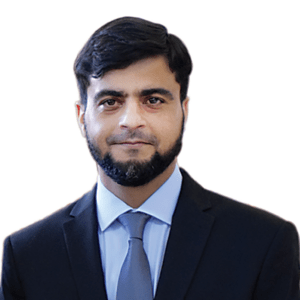
 Dr. Iftikhar is the SOHO Ambassador to Pakistan and a consultant clinical hematologist and hematopoietic stem cell transplantation physician at Armed Forces Bone Marrow Transplant Centre in Rawalpindi, Pakistan.
What are the most exciting or meaningful ways artificial intelligence (AI) is being applied in blood cancers right now? AI is already transforming the landscape of hematologic malignancies. From early diagnosis using digital pathology and flow cytometry interpretation to treatment planning through AI-assisted risk stratification, we’re seeing meaningful clinical applications. In multiple myeloma and lymphomas, AI is helping predict relapse risk and tailor therapy intensity. AI-driven natural language processing is also accelerating systematic reviews and evidence synthesis for guidelines, including those we are working on in Pakistan.
How do you foresee AI being applied in the future? In the near future, I foresee AI being integrated into every step of the patient journey: from AI-powered clinical decision support tools that suggest optimal therapies based on real-time genomic and clinical data to predictive models that can identify patients likely to benefit from novel agents or cell therapy. AI could also help bridge the urban-rural health care gap by enabling virtual tumor boards, automating follow-ups, and supporting low-resource physicians in real time.
What are some issues you foresee with using AI in the clinic in the future? A major challenge is algorithmic bias. Most AI models are trained on data from high-income countries and may underperform in low- to middle-income settings like ours in Pakistan. Additionally, lack of explainability in AI decision-making may hinder clinician trust. Data privacy, regulatory oversight, and integration with existing health systems are also critical concerns. It’s vital to ensure that AI augments and not replaces clinical judgment.
What kinds of partnerships or cross-disciplinary collaborations are most critical right now to move this forward? The future of AI in hematology demands robust cross-disciplinary collaboration among clinicians, data scientists, bioinformaticians, and policymakers. International collaborations like the one between Pakistan Blood and Marrow Transplant and SOHO can also facilitate AI-driven multicenter trials and data-sharing platforms tailored for diverse populations.
The first meeting of SOHO Pakistan took place on November 7-9, 2025, in Rawalpindi, Pakistan, as part of the society’s mission to educate healthcare professionals practicing hematology across the globe. Read more about the Ambassador Program.