
By: Karine Cohen-Solal, PhD
Two previous articles detailing the Continuous Learning Collaborative (CLC) pilot at SOHO 2025 were published in SOHO Insider in 2025. The CLC initiative was launched to educate clinicians managing relapsed/refractory (R/R) chronic leukocytic lymphoma (CLL)/small lymphocytic lymphoma (SLL), initially engaging 25 early-career physicians from within and beyond the United States and later expanding to the broader SOHO audience. Phase 1 of the CLC, conducted prior to the meeting, gathered real-world insights through de-identified patient records, interactive case simulations on the Build Your Own Case Study™ (BYOCS)™ platform, and detailed surveys to identify clinical challenges and educational needs. These data informed phase 2, a 90-minute Live Intensive session at SOHO 2025 that used case-based learning, real-time treatment decision exercises, and expert feedback to address adverse event (AE) management, therapy sequencing, and multidisciplinary care considerations. Participants also engaged in small-group discussions with faculty to explore complex clinical scenarios and practical implementation strategies. The multiphase structure of the CLC effectively translated emerging evidence into actionable insights, strengthening clinicians’ confidence in evidence-based sequencing, toxicity management, and patient-centered decision-making, with participants explicitly reporting intent to integrate these approaches into routine R/R CLL/SLL practice.
Five months of insights
In the five months since, we have compiled additional insights and clinical implications through phase 3 of the CLC, which includes an enduring component built from the Live Intensive session, as well as 30-minute one-on-one interviews with 18 participants from our cohort and two quarterly meetings with expert faculty. In this article, we highlight the program’s impact on clinical practice, underscoring how multiphase learning effectively engages both early-career and experienced clinicians in translating evidence and expert insights into informed care for patients with R/R CLL/SLL.
Enduring activity data
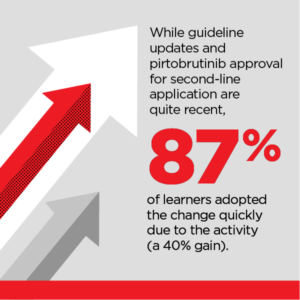
- While guideline updates and pirtobrutinib approval for second-line application are quite recent, 87% of learners adopted the change quickly due to the activity (a 40% gain).
- The activity effectively closed knowledge and competence gaps around novel therapies, their associated AEs, treatment algorithms, implementation and relevant post-Bruton tyrosine kinase inhibitor (BTKi) mutations. Learners showed a 52% increase in knowledge of obinutuzumab-related AEs, a 40% improvement in competence in selecting the appropriate treatment setting for chimeric antigen receptor (CAR) T-cell therapy, a 55% gain in knowledge of non-C481 BTK mutations associated with BTKi treatment, a 46% gain in competence in selecting the next treatment line, and a 39% improvement in ability to select BTKi for their patients with R/R CLL/SLL.
- An impressive 93% of learners stated that the program provided strategies to overcome barriers in R/R CLL/SLL care, including lack of knowledge regarding evidence-based strategies, lack of time/resources to consider change, access to a multidisciplinary care team for AE management and care coordination and patient adherence
 to treatment.
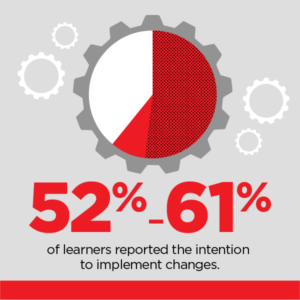
 - After participating in the enduring activity, 52%-61% of learners reported the intention to implement changes by using guideline-informed approaches, apply the latest data on novel therapies, integrate updated evidence and sequencing strategies gained from the activity, and re-prioritize shared decision-making (SDM) for next-step treatment planning in patients with R/R CLL/SLL. In addition, 33%-42% answered that their current practice has been reinforced in those areas as a result of learnings from the activity.
These findings suggest that the enduring activity both strengthened clinician confidence in current management strategies and encouraged further alignment with evolving evidence and patient-centered approaches for R/R CLL/SLL care.
Insights and clinical implications derived from participant interviews
I think the biggest impact is just being part of the community. I felt like I’m joining a group, and that part of collegiality, sharing my own problems with somebody who has also encountered similar problems, and then discussing with an expert. That was just mind-blowing. You’ll be surprised, because it is when you start to practice and you’re in your niche, you sometimes get isolated.
Questions in the previously mentioned one-on-one interviews focused on navigating novel therapy integration and sequencing, AE management, and SDM practices. The following key insights were revealed by asking, “What’s the one thing from this program so far that has had the biggest impact on your practice?”
- Participants frequently cited reduced clinical isolation as the most transformative impact. Access to experts boosted practice confidence, even without immediate consultation. Education for community oncologists should prioritize peer-to-peer connections beyond mere content delivery. Knowing expert support is available enhanced confidence in decision-making. As expressed by one of the interviewees, “I think the biggest impact is just being part of the community. I felt like I’m joining a group, and that part of collegiality, sharing my own problems with somebody who has also encountered similar problems, and then discussing with an expert. That was just mind-blowing. You’ll be surprised, because it is when you start to practice and you’re in your niche, you sometimes get isolated.”
- Expert guidance on managing atrial fibrillation (AFib) and cardiac AEs associated with BTKi treatment directly influenced prescribing behaviors. Clinicians who had previously avoided BTKis in patients with arrhythmias now feel confident prescribing them while co-managing with
Dr. William Wierda cardiology. The program helped fill gaps that guidelines alone cannot address. Pragmatic, expert-led algorithms prove more effective at changing behavior than published evidence or guidelines, as confirmed in discussions with Dr. William Wierda at the first quarterly meeting (detailed below).
- At least one institution updated its CLL/SLL testing panel to include next-generation sequencing directly because of program insights. The CLC initiative drove systemic changes in testing protocols at the institutional level, improving diagnostic and testing accuracy and, subsequently, treatment personalization.
- The program increased clinician confidence in treatment sequencing and discussing therapy options with patients, including decisions about switching or continuing treatments and framing risk-benefit profiles. Building SDM skills is an often-overlooked outcome for continuing education in R/R CLL/SLL. Since effective communication can meaningfully improve patient outcomes and satisfaction through informed, shared decisions, it is just as important as knowledge acquisition.
- For under-resourced community oncologists and international oncologists, subsidized access to the SOHO conference was one of the highest-impact elements. The intimate, disease-focused, interactive format was preferred over larger generalist meetings. Investing in conference subsidies provides exceptional value in professional development and knowledge as well as skills dissemination, with positive ramifications at the institutional level.
- In this regard, one international learner used the program content to deliver lectures on BTKi therapy and its AEs to colleagues, amplifying the skills/strategy spread. Program participants act as regional multipliers, extending educational reach and fostering broader adoption of best practices.
Quarterly meetings with CLL/SLL expert faculty
In December 2025, the first quarterly meeting of phase 3 was conducted with Dr. William Wierda and learners from the cohort of 25 investigators participating in the CLC. Several illuminating questions—some submitted by learners before the meeting and others raised during the session—about real-world challenges or specific case scenarios were discussed. Topics covered included:
- Richter’s transformation in CLL: What is the optimal treatment for a patient with CLL that evolved into Richter’s in post-covalent BTKi exposure? Pirtobrutinib or venetoclax plus R-CHOP? How to determine a clonality relationship between CLL and new onset of large-cell lymphoma (Richter’s from CLL versus de novo [large B-cell lymphoma])? The 20-minute exchange resulting from this query highlighted a significant unmet clinical need and the uncertainty clinicians face in effectively treating patients who develop Richter’s.
- Minimal residual disease (MRD) is a rapidly evolving endpoint in clinical trials and treatment algorithms for hematological malignancies, and its utility in guiding therapy in CLL/SLL was addressed in depth in response to multiple learner questions: Which method to use? ClonoSEQ or flow cytometry? Which threshold: MRD 4, MRD 5 or MRD 6? Do we perform it on bone marrow or peripheral blood? When to check MRD? How long do we need to treat post-MRD undetectable status? How do you currently incorporate MRD assessment into the management of patients with R/R CLL? Could MRD-adapted, limited therapy have any role in the R/R setting?
- Pirtobrutinib: Can pirtobrutinib be used as monotherapy to induce durable remission, other than as a bridge to CAR T-cell therapies? If pirtobrutinib was moved into the frontline setting, what would be the impact on treatment sequencing and resistance patterns after relapse?
- In a patient with a pre-existing history of permanent Afib, how do you follow them when starting a BTKi? Do you involve cardiology from the start?
- How do you manage severe cytopenias during obinutuzumab plus venetoclax early on with bone marrow clean out? How much do you rely on growth factor and transfusion support?
These discussions signal that community HCPs are changing prescribing behavior on BTKi for patients with Afib as a result of the CLC program education. In particular, the shift from falling back on venetoclax-based therapy to utilizing BTKi with cardiology co-management represents a concrete practice evolution.
Furthermore, the long exchange between the cohort and Dr. Wierda on managing patients who have Richter’s transformation highlighted an unmet clinical need in community settings for which more education is needed. Key discussion points on this topic revolved around the role of pirtobrutinib, the venue of transplant, BTKi as post-transplant maintenance, and CAR T-cell therapy for these patients.
Overall, the first quarterly meeting reinforced the current standard of care and increased physician confidence in applying evidence, noticeably influenced clinical practice and introduced the cohort to emerging directions in R/R CLL/SLL, fostering substantial, reflective dialogue with faculty.
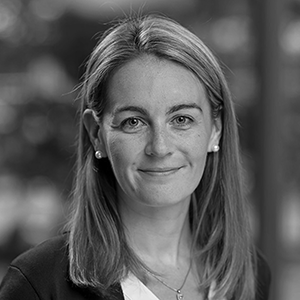
The second quarterly meeting with Dr. Meghan Thompson and the learners from the 25-cohort occurred in March 2026. Ahead of the meeting, we collated challenging real-world cases from learners to guide the discussion, which also followed paths emerging from questions that arose during the session. Major discussions included:
- One international learner presented a highly complex case that illustrated the gap faced by patients around the globe in accessing novel therapeutic agents, wherein a patient with high-risk disease (TP53 mutation, unmutated IGHV) received suboptimal chemoimmunotherapy not by clinical choice, but by resource constraint. The patient is a 36-year-old woman with SLL, concurrent autoimmune hemolytic anemia, myelofibrosis, and disease progression in a setting with no access to BTKi, venetoclax, positron emission tomography scanning, or combination fludarabine, cyclophosphamide, and rituximab.
- Another learner described a patient, a man who lives in a remote location and has CLL with triple-positive antiphospholipid antibody syndrome, prior endocarditis with valve replacement, impaired ejection fraction, and a history of ventricular tachycardia. Discussion around this case, representative of patients with compounding BTKi contraindications, emphasizes the importance of peer-to-peer exchanges—a key component of the current educational design—in complementing guideline-informed care.
- In an exemplification of program-driven practice change, a cohort-member described how they applied the BTKi/venetoclax overlap strategy learned at the SOHO intensive to their patient, keeping the covalent BTKi during the venetoclax ramp-up. The physician explicitly attributed this strategy to content delivered at the SOHO intensive. The patient who received the BTKi/venetoclax overlap strategy responded well, and our learner is now considering employing this therapeutic approach more broadly.
- A participant discussed the case of their 40-year-old patient who had CLL and developed Richter’s transformation with splenomegaly and severe cytopenias after multiple prior therapies, including venetoclax/obinutuzumab and covalent BTKi. Treatment with pirtobrutinib produced a nodal response and was being used as a bridge to allogeneic stem cell transplant (allo-SCT). During the exchange with Dr. Thompson, this learner was reassured that selecting allo-SCT was a reasonable, potentially curative strategy when faced with a fit patient who had controlled disease, as novel agents like pirtobrutinib may draw responses that are often not durable when Richter’s transformation has developed.
As the examples above illustrate, the case-based discussion between the physician cohort and expert faculty was highly beneficial for learners. The group explored complex patient cases, including those in which management of R/R CLL/SLL was compounded by comorbidities, complications, the onset of concurrent myeloid neoplasms, and lingering toxicities. The peer-to-peer exchanges that occurred in this meeting produced significant practice impacts that extend beyond what can be achieved by purely data-driven or didactic presentations. Learners from both the United States and international settings reported strikingly positive experiences.
The insights and data gleaned from this program demonstrate that the CLC method of incorporating multiple approaches, including structured interviews and regular quarterly meetings (the next meeting in June 2026, will be lead by Dr. Catherine Coombs), reinforced participants’ learning and progressively deepened their knowledge and confidence. The interactions served as touchpoints for reflection, feedback, and peer-to-peer exchange, helping to solidify acquired knowledge and strengthen participants’ ability and willingness to apply newly acquired knowledge, competencies and skills in clinical practice.
About the author
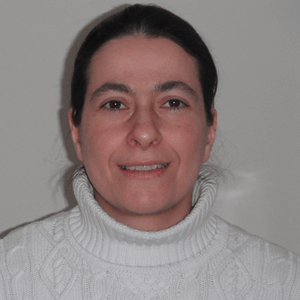 Karine Cohen-Solal, PhD, is an experienced scientific and medical writer with extensive expertise in oncology, dedicated to advancing cancer care through clear, evidence-based communication and continuing medical education. Drawing on over 20 years of experience in oncology research, combines deep scientific insight with exceptional writing skills to translate complex discoveries into meaningful narratives that inform clinical practice changes and ultimately elevate patient outcomes.