

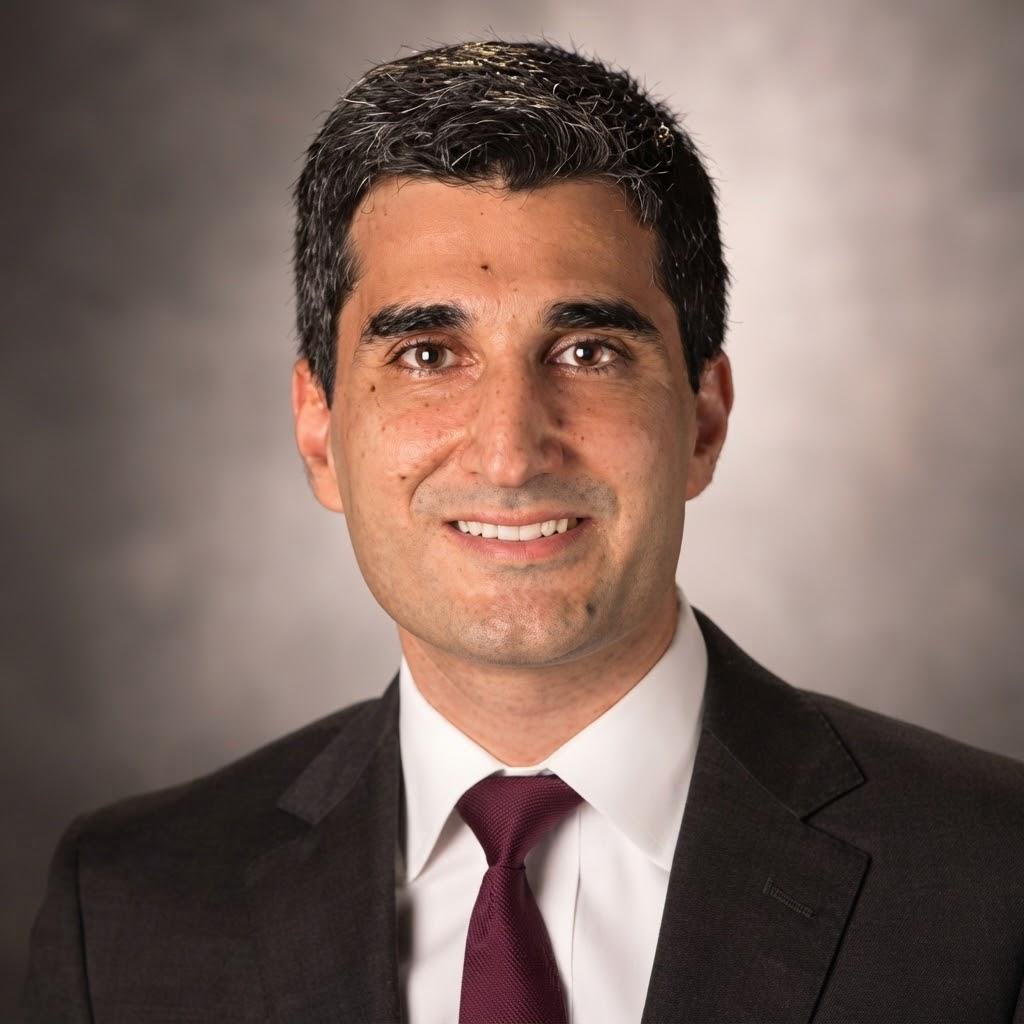
At 7 am CST on September 9, Ghayas C. Issa, MD, of the University of Texas MD Anderson Cancer Center in Houston, talks about the role of menin inhibitors in acute myeloid leukemia in today’s Meet-the-Professor session.
Which menin inhibitors have been approved?
Menin inhibitors are new targeted therapies for acute myeloid leukemia (AML). We now have two menin inhibitors that are approved: revumenib and ziftomenib. Revumenib was approved for KMT2A-rearranged leukemias about two years ago and then later approved for NPM1-mutant AML. Ziftomenib is approved for relapsed or refractory NPM1-mutant AML.
How has the science evolved over the years in this area?
Like many things in science, it took a lot of incremental knowledge from many people to understand the biology of leukemia and its subtypes. The major breakthroughs involved understanding of the function and structure of menin, then designing medicines that could fit the binding site pocket within menin. That was the genesis of menin inhibitors. Since that discovery, multiple companies have launched their versions of menin inhibitors, and the success of multiple inhibitors shows the robustness of the data.
What science do you think will most advance this area of AML treatment?
This is just the start. Menin inhibitors are epigenetic therapies, and with this type of therapy, we are showing that targeting key transcriptional regulators can reverse the leukemia back into a normal state. This gives us hope that many other epigenetic regulators can be targeted, especially in leukemias resistant to chemotherapy.
If we understand the biology well, we can reverse this epigenetic imprinting. Regarding menin inhibitors specifically, we are now understanding how to better utilize these medicines. The fun part is including all these medicines into combinations. Instead of using them as a last resort for patients, we’re trying to combine them with standard chemotherapy or other exciting new drugs to improve the chance of a cure for patients.
What do you hope people who attend the Meet-the-Professor session can take away as you dig deeper into the topic?
I hope they learn about the journey that led to the discovery of menin inhibitors and how to design studies specifically for menin inhibitors or similar therapies that would lead to success. I will also discuss how to use these menin inhibitors in clinical practice, including how to monitor response and address the side effects.




Leave feedback about this