

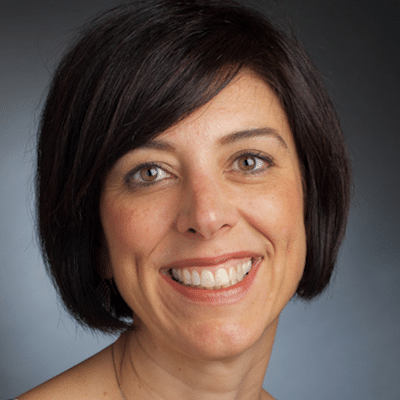
Ann LaCasce, MD, MMSc, took an unexpected path to becoming a lymphoma specialist. After someone stole her organic chemistry notebook in college, she traded pre-med for the art world, spending five years working in a contemporary art gallery before returning to medicine. Her artistic sensibility found a home in lymphoma. “Hodgkin lymphoma has this incredibly unusual look under the microscope.”
What first inspired you to pursue medicine, and what specifically drew you to lymphoma? My dad was an internist. I grew up in Downeast Maine, and he was a community doc, a primary care physician. I used to work in his office in the summers, taking people’s blood pressures and EKGs. I loved what he did. He just seemed to derive so much pleasure from it. He had patients he followed for many years, including a lot of elderly patients, and I enjoyed that.
I went to college as a pre-med student at Bowdoin, a small liberal arts college where everyone in my family had gone. There were a lot of pre-med students, and someone stole my organic chemistry notebook. I thought, ‘You know what? I don’t want to work with these people. I’m going to do something else.’
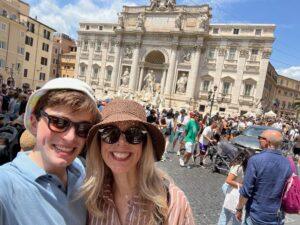
I had taken an art history class, and I decided to work in an art gallery. My parents were supportive, even though it was an odd choice. I worked at a contemporary art gallery for five years. I almost thought I would become an art restorer as it seemed like a good marriage of art and science. But I realized I hated crafts, so I applied to medical school.
When I was a first-year medical student at Tufts, we had this course taught by Jane F. Desforges, who was a lymphoma specialist, who I identified with. During my oncology rotations, I then found that I loved working with the lymphoma patient population. I ended up at Brigham for residency, where we did a lot of oncology, and I did a lot of inpatient hematologic malignancies. I loved it, and it sort of sealed that this was what I wanted to do. I love the visual aspects of lymphoma, too, looking at scans and slides. Between that, the research and the patients, it was the perfect fit for me.
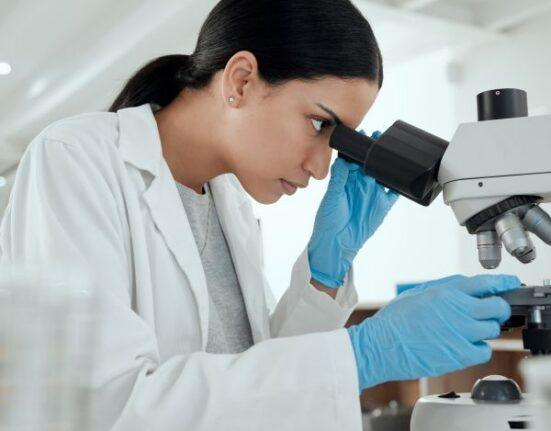
When you say lymphoma is visual, how is it different from other blood cancers in that respect? Hodgkin lymphoma, which is probably my favorite disease to treat, has this incredibly unusual look under the microscope. Looking at the slides, they’re art. They’re visually interesting, and it’s a lot of pattern recognition. Now it’s become much more complex. We do a lot of molecular tests and fancy tests to diagnose these different diseases. But looking at the slides under the microscope, lymphoma is what caught my attention.
What has been the biggest shift in how patients are treated or how medicine has changed since you started your career? I’ve been a lymphoma physician for about 25 years. The diagnostics, the ability to get PET scans and look at the images myself on the computer and really understand someone’s stage, and the molecular diagnostics that allow us to precisely subclassify lymphoma have been amazing. There are so many different subtypes of lymphoma, and that number keeps growing as we take things we used to lump together and recognize them as biologically discrete subtypes. Not only are the therapies so much better, but even our supportive care has improved. I think about what we used to use for nausea and how we got patients through treatment when I first started compared with now. All the novel agents and immunotherapies, it’s just been an explosion of new drugs. It’s been incredible to watch that happen in real time.
Has AI affected your practice yet, or are you still waiting for the revolution? It has, to a certain extent. In oncology and lymphoma, there’s a lot of internal medicine, and things have certainly evolved since I was training as an internist before going into oncology. I use AI to look up drugs I’m unfamiliar with or the management of other illnesses. I also find it helpful for identifying references and case series. If you have a rare type of lymphoma, finding the relevant data in PubMed can be a little clunky. AI quickly pulls up references and allows you to delve deeper much faster than before.
If I’m seeing a rare T-cell lymphoma or something I don’t see often, I want to make sure I’m not missing a therapeutic option. I practice in an amazing lymphoma group, and we talk among ourselves all the time. I always ask colleagues for input when I’m unsure of the best approach, but it’s also nice to ask AI, “What am I missing? Am I forgetting to consider something?” It’s like having an assistant with you all day long.
But it doesn’t take the place of that interpersonal connection. You still have to examine your patients. AI will never examine your patients for you or be able to tell you that a patient doesn’t look well, or who’s sick and who’s well. Those are things I think we can’t let go of. In an era of AI, I think it’s so important to maintain the humanity of our job and our interactions with patients.
Looking back on your career, who has influenced you along the way? Well, Jane Desforges, for one. I’ve had a winding career, and there have been a lot of people who have influenced me along the way. The former fellowship program director, Bob Mayer, whom I took over for 15 years ago, was a big influence. Margaret Shipp, a laboratory-based lymphoma scientist, was my mentor when I was a fellow. I learned from her and continue to learn from her. In addition, peer mentors, like Kerry Savage, Jonathan Friedberg and Soni Smith, to name a few have been so important to my career.
There are also people in the clinic, including Arnie Freedman, and colleagues who are more junior to me who, in some ways, serve as informal mentors. The Lymphoma Research Foundation and the Alliance have introduced me to peers at different institutions. I think that’s the key to mentorship. You need a lot of people who serve different roles.
In your mind, what is the biggest unresolved debate in lymphoma care today? I think one is the debate around CAR T-cell therapy and bispecific antibodies for aggressive and indolent non-Hodgkin lymphoma. We’ve used CAR T-cell therapy with curative intent in people with relapsed disease, and we have longer-term follow-up. But are bispecific antibodies as good? We don’t have as much long-term follow-up, and they’ve never been compared head-to-head. There’s a lot of debate about which will ultimately be better, although there’s probably room for both.
What piece of advice do you have for early career clinicians? The most important thing in academic medicine is mentorship. Figure out what you love to do and identify the right mentors to work with as you move forward. I work with a lot of junior faculty and fellows, and I think more than anything else, aside from their own grit and interest, having the right mentor who can help make introductions and guide their career development is so important.
What do you believe about being a physician today that you might not have believed early in your career? There are three reasons why I love being a physician: the patients, the science, and the colleagues. I don’t think I recognized early on how much joy you get from working with colleagues, whether it’s collaborating on a trial, caring for patients together, or working with nurse practitioners and others within your practice. I didn’t appreciate how much those relationships would contribute to my quality of life at work and why I love what I do.
What has been the most rewarding aspect of your career? Besides caring for patients, the most rewarding thing has been running our fellowship program. We have a big program, and seeing the fellows graduate, go on to careers of their own and be successful has been very rewarding for me.
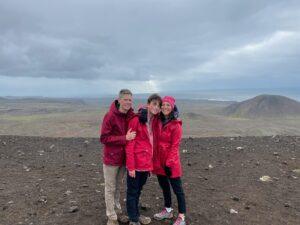
How do you spend your time outside of work? Spending time with my family, especially my husband and son, Henry. I love going to Maine—I’m a Mainer—and I love skiing, swimming in the lake, reading fiction and watching British murder mysteries.
The holidays are coming up. What’s a good, cozy murder mystery that you can recommend? I haven’t read it, but Louise Penny’s new book is out. She crafts such an amazing mystery, and I’m looking forward to reading it over the holidays.
If you could instantly master any skill unrelated to medicine, what would it be? I would love to be able to ski the moguls better, to really master the bumps.
Ann LaCasce, MD, MMSc, is an associate professor of medicine, a lymphoma specialist and the Director of the Dana-Farber/Mass General Brigham Fellowship program. This interview has been edited for clarity and length


Leave feedback about this