
By the time Craig Chase, a father of two boys who lives in the San Francisco Bay Area, boarded a flight to China in 2017 to join a clinical trial testing an experimental therapy for his multiple myeloma, he had already exhausted nearly all treatment options.
“I was at the end of my rope,” he said.
Chase was diagnosed in 2014 at the age of 52 after failing to recover from injuries sustained in a fall during a bike ride on Mount Diablo, a well-known East Bay landmark. From the start, his disease was aggressive, and he was considered a very high-risk patient, with extramedullary disease, including plasmacytomas in his mouth. Having gone through multiple lines of therapy, he once again found himself on a waiting list for a clinical trial, this time at Stanford University in Palo Alto.
His chances were slim. As Chase recalled, the physician leading the trial told him he was “well down the list” and that “it was going to be a while.”
The 2010s ushered in the first wave of CAR-T cell therapies, but MM lagged behind other blood cancers.1 While CAR-T treatments were beginning to show promise in leukemias and lymphomas, patients with myeloma still had no approved options.2 Many faced a poor prognosis going through numerous regimens, sometimes more than a dozen, with no reprieve in sight.
“Other options back then were just different combinations of drugs a patient had already had before,” said Yi Lin, MD, PhD, a professor of medicine at in Rochester, Minnesota, in an interview with SOHO Insider.
Compelling findings out of China
As Chase searched for another treatment, he remembered seeing an email describing data from a small phase 1 study conducted in China. The findings had begun circulating on the conference circuit, but access was limited, and the therapy had not yet entered US trials. Investigators in the United States were still uncertain how to interpret the data.
“We were all somewhat skeptical about the data, especially since the patients were all from China, and perhaps there weren’t any heavily pretreated patients in the study,” said Thomas Martin, MD, a professor of medicine at the University of California, San Francisco, who helped Chase pursue treatment at UCSF and China.
With few options left, Chase asked his clinician at the time, Gabriel Mannis, MD, then a hematologist at UCSF, whether he could get in touch with the company behind the experimental therapy with the hopes of being enrolled.
“He seemed a bit perplexed, both of the data and my desire to go to China,” Chase recalled.
Dr. Mannis ultimately reached out to Dr. Martin, and conversations followed. Legend soon agreed to accept Chase into the study.
“They said they would take me,” Chase recalled. “But they wanted to know right away.”
Chase and his wife flew from San Francisco to Shanghai before traveling on to Nanjing, where the trial team was based. It was his first time in Asia and his first time pursuing treatment outside the United States.
“We were curious, excited, and hopeful,” he said.
Craig’s story would become a part of medical history. The product he received, then called LCAR-B38M, was later licensed to Janssen and became known as ciltacabtagene autoleucel (cilta-cel). It is one of the two BCMA-directed CAR T-cell therapies currently approved in the United States and, now eight years later, once again drew significant attention at ASCO 2025.
Legend Biotech
In 2014, a small biotechnology company called Legend Biotech was founded in Nanjing, one of China’s oldest cities. Now headquartered in the United States, with a large global base of operations in New Jersey, Legend began with little visibility; by the company’s own account, it was operating out of a space in Nanjing no larger than a freight elevator.3
At the time, Legend had no public profile or website, and no track record in drug development. That early anonymity would later fuel skepticism when the company’s first clinical data began to circulate.
Legend’s scientists were investigating a novel chimeric antigen receptor T-cell therapy targeting B-cell maturation antigen, or BCMA, a protein expressed on malignant plasma cells in MM. The approach involved collecting a patient’s own T cells, genetically engineering them to recognize BCMA, and reinfusing them to attack the cancer.
Just about the time Chase was searching for treatment options, in June 2017, investigators on the study presented early results from a phase 1 study at the ASCO annual meeting. Among the first 35 heavily pretreated patients, the response rate was 100%, with a high proportion achieving complete response.
The reaction in the room was disbelief.
“I was sitting in that same seminar room,” said Ying Huang, PhD, who at the time was a biotech analyst and would later become Legend’s CEO. “I think everyone had the same feeling. This is too good to be true.”
Dr. Huang said the results immediately raised questions about the company itself.
“We had never heard about this company,” he said. “After the seminar, I went back to my hotel room and did a Google search for Legend Biotech. There was nothing. The company didn’t even have a website.”
The skepticism was not limited to Legend’s obscurity. Clinicians and scientists questioned whether the data could be replicated and whether the responses would hold up in a larger population.
“The first reaction was, is this real?” Dr. Huang said. “Is this really backed by good science, and can this data be reproduced in more patients?”
‘You’re not stopping it’
When Chase arrived at the clinic in China, he said the hospital felt full of humanity and care, even though the cultural differences were immediately apparent.
“It was culturally a big shift because we didn’t speak the language,” Chase said. “I was in waiting areas with patients who spoke no English. It was a little scary at first, but the experience was also thrilling.”
By Chase’s account, the treatment was challenging. After infusion, he developed cytokine release syndrome, a dangerous immune overreaction triggered by the therapy.
“At one point, things got pretty bad,” he said. “I had a 106-degree fever. I could hardly breathe.”
The medical team discussed administering a steroid to help control the immune reaction, a step that would have most likely stopped the treatment’s effects altogether. Chase and his wife had already agreed that this would not be an option.
“We didn’t go through all of this, separate from our family and travel halfway around the world, just to stop it,” Chase said. “That would have meant coming home and dying.”
His wife met with the physicians and made their position clear.
“She told them, ‘You’re not stopping it,’” Chase recalled. “He’s either going to recover and let the medicine do what it’s supposed to do, or he won’t.”
A few hours later, Chase said, his condition began to improve.
“I started to turn the corner,” he said. “From there, I really went on to feeling pretty good, considering everything.”
A long stretch of normal life
Chase began to recover in a way he had not experienced in years. He said the CAR-T therapy gave him a long stretch of
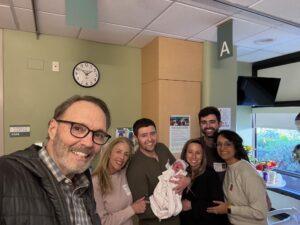
normal life that had once seemed impossible.
“I was a year and a half without any treatment, and I had been blowing through treatments prior to that,” he said. “I had a spell of great, normal life. We returned, and it was great to be free of the medication anchors that were in place at the time.”
Returning home to his children after two months in China was an “incredibly emotional” moment, he recalled.
“I’ll never forget pulling into the driveway,” Chase said. “My two sons were at the house. I remember thinking at that time that no matter what the outcome, it was worth it because it was life affirming.”
When Chase returned home, he was told he was in complete remission and had no measurable residual disease.
“It just blew me away,” he said.
Chase’s results helped draw the attention of the US pharmaceutical community to the experimental therapy, according to Dr. Martin.
“Many of us, including me, think that Craig is what prompted the US pharmaceutical industry to say, hey, let’s try that CAR-T in the US,” Dr. Martin said, adding that Chase was a heavily pretreated patient, meaning the kind of patient many doubted could achieve such a deep remission.
Moving quickly
For Janssen’s part, after seeing the early results from China, the company moved quickly, entering a collaboration and licensing agreement for the therapy from Legend in December 2017,4 just six months after the early data had become public.
In the spring of 2018, the company launched a new clinical program, later known as CARTITUDE-1, a phase 1b/2 trial that would go on to serve as the pivotal study to support the product registration in the United States.
Dr. Lin, an investigator on the CARTITUDE-1 trial, credits Janssen with “making the right call” to partner with Legend Biotech and bring the CAR T-cell therapy into trials in the United States.
The five-year results from the CARTITUDE-1 trial were published in the Journal of Clinical Oncology in 20255 and were presented at both the ASCO® Annual Meeting and the European Hematology Association Congress that same year.
“These amazing results are in patients who received cilta-cel after six prior therapies. When we start using these therapies as part of frontline or initial therapy or for early relapse, we are hoping this will translate into cure for many more patients. The expectation from the get-go will be cure—not for patients to have a chronic illness,” Dr. Martin said.
The data were hard to ignore. At ASCO®, the investigators reported that the durability and depth of responses achieved without maintenance therapy were unprecedented in such a heavily pretreated patient population.
Of the 97 patients enrolled in the trial, investigators reported that 32 patients remained progression-free without additional therapy following a single infusion.
In its annual report, the American Association for Cancer Research described the results a “major milestone” and described the therapy as “potentially curative.” 6
“These are very, very exciting results,” Dr. Lin said. “This is one-third of the patients treated on that clinical trial, and these are late-line patients. The median line was six prior therapies. Some had up to 18.”
Five years without therapy for patients accustomed to frequent clinic visits and ongoing treatment can feel like a lifeline after years of constant care.
“Being five years out, not needing any antimyeloma treatment, still in remission, that’s five years from a quality-of-life standpoint,” Dr. Lin said. “Not being tied down to a clinic for a weekly injection. They can travel; they can do things. This is very powerful.”
She said patients often describe the experience as emotional.
“After just a few months, I’ve had patients tell me, ‘I’m finally remembering what my life was like before I had MM,’” she said. “They can simply enjoy life. That’s what’s so powerful about a treatment-free period.”
It is time to say ‘cure’ in MM
“At EHA this year, I heard the word ‘cure’ more times in one talk than ever in my life,” Dr. Martin said. “The talk was by this wonderful professor right here, and that’s why we asked him to talk about ‘cure’ in myeloma at SOHO 2025.”
Dr. Martin was referring to Sundar Jagannath, MBBS, a professor of medicine in hematology and medical oncology at the Icahn School of Medicine at Mount Sinai and the Tisch Cancer Institute.
It was September, a few months after the CARTITUDE-1 data were released, and Dr. Jagannath was about to take the stage at the Thirteenth Annual Meeting of the Society of Hematologic Oncology to talk about cure in myeloma.
“In the 1990s and early 2000s, we used the mantra ‘treatable but not curable,’” Dr. Jagannath said. “Then more recently, it became ‘a chronic disease that we can control with continuous maintenance therapy.’ Those are all terminology we should get rid of. We can cure patients.”
Language matters
Dr. Jagannath also argued that it is time to move past qualifiers such as “functional cure” or “operational cure.”
A cure, he said, should mean a sustained complete remission lasting five years or longer without maintenance therapy.
For decades, that standard felt out of reach, particularly for patients with relapsed disease. But Dr. Jagannath said growing evidence now supports overtly using the word.
Data from CAR T-cell trials, including CARTITUDE-1, show that a subset of heavily pretreated patients can achieve deep remissions that persist for years after a single infusion, without ongoing therapy, according to Dr. Jagannath.
He added that similar patterns are beginning to emerge in other modern trials.
“This is a new kind of outcome for late-stage disease,” Dr. Jagannath said.
He argued that language matters. Calling a disease incurable shapes how clinicians treat patients, how regulators evaluate therapies, and how patients imagine their futures.
“If you feel like you’re going to cure the patient, it is a completely different approach,” he said. “How you treat the patient, how you manage them, and how you talk to them.”
Cure also provides patients with hope that they will not be afflicted forever with an incurable, fatal disease.
Pointing to the long-term follow-up from CARTITUDE-1, Dr. Jagannath said the definition of cure can already be met in practice for some patients treated with cilta-cel.
“At my center, patients received a single infusion and went on to years without additional therapy,” he said. “That meets the definition of cure.”
Survivorship as part of the care plan
Eight years after Chase’s flight to China, he remains on myeloma treatment but is active, optimistic, and focused on the life he is able to live.
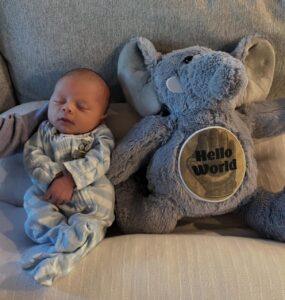
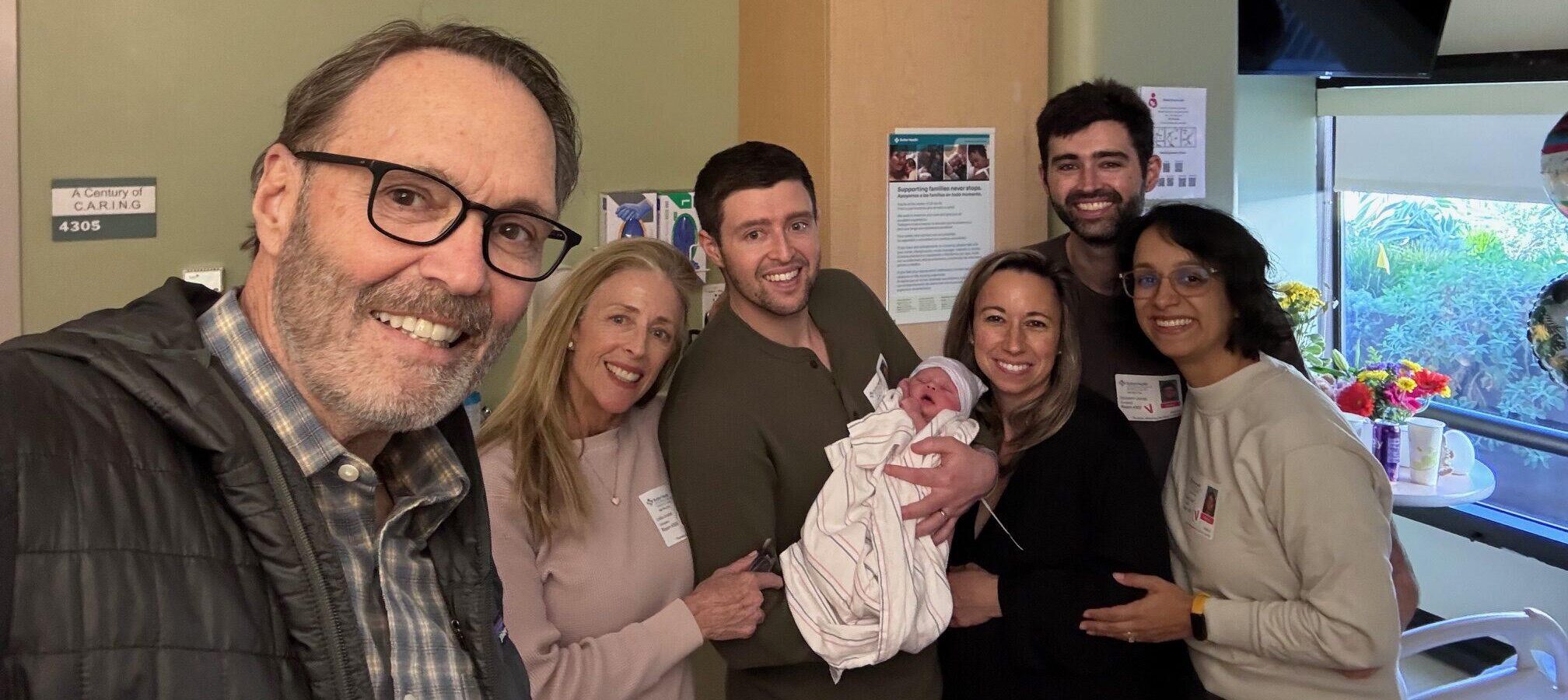
“I ski; I’m very active,” he said. “I’m going to see my first grandchild born this December.”
He also credits his wife for her long-term support.
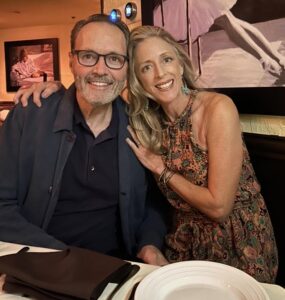
“We celebrated our 40th this year and she has been an absolute rock, both in China and here at home,” he said. “It’s hard to imagine anyone taking this path without the inspiration and support of their person and she has been that for me.”
*****
Clinicians do not fully understand why some patients experience long, treatment-free remissions after being treated with CAR T-cell therapy while others do not. Researchers have identified clues, Dr. Lin said, but there is no reliable way to predict outcomes in advance, and many patients fall somewhere between clear success and clear failure.
“I wish we had a crystal ball,” Dr. Lin said. “We don’t. That is why there are clinical trials trying to understand which patients have the benefit of the treatment-free period and whether we can predict who won’t.”
As myeloma experts continue to debate the meaning of “cure” in academic halls, Dr. Lin said it is time to start talking to patients more confidently about survivorship, given that some of them will experience five years or more free of myeloma.
The field, she added, needs to be “braver” in how it communicates success and to begin treating survivorship as part of the care plan, as is done in lymphoma.
“For myeloma, we don’t have that because we’re always telling them their disease could come back,” she said. “But if they can have this remission period, isn’t it important for them to be able to focus on life again?”
References
- First-ever CAR T-cell therapy approved in U.S. Cancer Discov. 2017;7(10):OF1. Accessed January 13, 2025. doi:10.1158/2159-8290.CD-NB2017-126
- Dana-Farber Cancer Institute. First FDA approval of CAR T-cell therapy for multiple myeloma marks milestone for patients. Dana-Farber Cancer Institute. Published March 27, 2021. Accessed January 13, 2025. https://www.dana-farber.org/newsroom/news-releases/2021/first-fda-approval-of-car-t-cell-therapy-for-multiple-myeloma-marks-milestone-for-patients
- Legend Biotech. Our Story. Legend Biotech. Accessed January 13, 2026. https://legendbiotech.com/our-story/
- Janssen enters worldwide collaboration and license agreement with
Chinese company legend biotech to develop investigational CAR-T anti-cancer therapy. Accessed October 28, 2025. https://www.jnj.com/media-center/press-releases/janssen-enters-worldwide-collaboration-and-license-agreement-with-chinese-company-legend-biotech-to-develop-investigational-car-t-anti-cancer-therapy - Jagannath S, Martin TG, Lin Y, et al. Long-term (≥5-Year) remission and survival after treatment with cltacabtagene autoleucel in CARTITUDE-1 patients with relapsed/refractory multiple myeloma. J Clin Oncol. 2025;43(25):2766-2771. doi:10.1200/JCO-25-00760
- Sansbury BM, Blackman E, Primm KM, Zaidi SK, Sengupta R. AACR Cancer Progress Report 2025: unifying cancer science and medicine: A continuum of innovation for impact. Clin Cancer Res. 2025. doi:10.1158/1078-0432.CCR-25-3366