


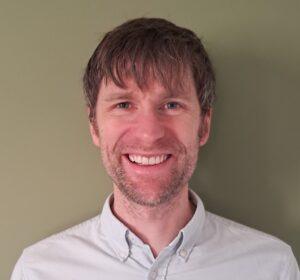
Dr. Tom Coats
The inaugural UK SOHO meeting represents a high quality educational opportunity for the UK haematology community. Its compact format,
spanning just two stages, ensures that a remarkable breadth of haemato-oncology is covered over a short period. Coming only weeks after the publication of the 10-year cancer plan, the meeting is timely. While we cannot ignore the wider challenges facing the NHS, this programme highlights the extraordinary pace of progress in our speciality from scientific discovery to service innovation. Alongside sessions showcasing emerging science, there are others firmly grounded in the realities of everyday clinical practice, including managing disease in young, pregnant, and elderly patients.
A prominent theme running through the SOHO UK programme is the ongoing contribution of genomics to modern haematology. Although genomic profiling has been part of routine practice for some time, it continues to provide new and clinically meaningful insights into diagnosis, risk stratification, and treatment selection. Dr. Jurjen Versluis will explore how genomics can inform risk stratification in intensively treated older patients with acute myeloid leukaemia (AML; Session 5 at 9.00 on 4 March), a particularly pertinent topic in light of recent phase 2 data demonstrating the efficacy of non-intensive approaches as bridges to transplantation.
With the routine use of myeloid gene panels in suspected myelodysplastic syndromes and AML, clinicians are increasingly encountering variants that may represent inherited predispositions to leukaemogenesis. Yet guidance on navigating this complex area remains limited. Clair Engelbrecht’s session on variant interpretation and genetic screening (Parallel Session at 14.10 on 4 March) promises to be a valuable practical resource.
Dr. Catherine Cargo will similarly address another consequence of expanded panel testing—clonal cytopenia of undetermined significance— highlighting how evolving diagnostic categories continue to reshape clinical decision-making (Parallel Session at 13.30 on 4 March).
Alongside advances in diagnostics, the programme reflects the growing complexity of treatment selection. With NHS funding now available for a widening range of therapies, clinicians and patients alike face difficult choices about how best to balance efficacy, toxicity, logistics, and long-term outcomes. Dr. Sridigar Chaganti will discuss second-line management of large B-cell lymphoma in a UK context (Session 2 at 12.45 on 3 March), while in chronic lymphocytic leukaemia, Dr. Piers Patten will guide delegates through the expanding array of first-line options (Session 7 at 13.20 on 4 March). Updates from Professor Claire Harrison and Professor Mhairi Copland on new therapies in myeloproliferative neoplasms and chronic myeloid leukaemia, respectively (Parallel Session at 10.15 on 3 March), will further illustrate how rapidly treatment landscapes are evolving.
These sessions collectively highlight a central challenge for contemporary haematology: selecting the “right” treatment in an era of abundance, while remaining attentive to patient preference, comorbidity, and service capacity.
Ageing and frailty form another major strand of the programme. As the incidence of many haematological malignancies increases with age, integrating frailty and comorbidity into clinical decision-making is increasingly essential. Dr. Anjum Khan will provide an overview of ageing in haematology (Parallel Session at 17.15 on 3 March), while Professor Gordon Cook will focus specifically on frailty in myeloma (Session 1 at 9.55 on 3 March). With growing numbers of intensive and semi-intensive regimens available for non-transplant- eligible patients, and with emerging data from frailty-adapted trials, these sessions are likely to have wide relevance across multiple disease groups.
Appropriate assessment, however, is only part of the story. Optimising patients for treatment remains an underutilised opportunity. Dr. Justin Loke will share experience of trials in prehabilitation and enhanced supportive care (Parallel Session at 17.55 on 3 March). Professor Charlotte Manisty will offer a cardiologist’s perspective on optimising haemato-oncology patients (Session 8 at 16.20 on 4 March), a particularly valuable contribution given that access to cardio-oncology expertise remains variable across UK centres.
Beyond individual patient management, the programme also reflects growing interest in learning systematically from routine clinical practice. As computing power and data infrastructure continue to develop, the potential to capture and analyse real-world outcomes has never been greater. Yet translating this potential into actionable insight remains challenging. This is in part because of the difficulties in capturing complex constructs such as frailty and functional status in a reproducible way, but also due to challenges integrating patient data, including genomic information, from fragmented and often poorly connected sources.
Dr. Priyanka Mehta will share her experience of launching a prospective AML registry (Parallel Session at 12.35 on 3 March), illustrating both the promise and practical challenges of large-scale data collection. Dr. Chris Parrish will offer an intriguing glimpse into the future through early work using wearable technology to augment and objectify frailty assessment (Parallel Session at 17.35 on 3 March). Dr. Wai Keong Wong, drawing on his experience as both a practising haematologist and a clinical transformation officer, will discuss the current and future roles of artificial intelligence in clinical practice and healthcare systems (Parallel Session at 16.10 on 4 March).
The meeting is also privileged to host Professor Sir Bruce Keogh, who will reflect on the emerging value of real-world data for the wider NHS in his predinner address (at 19.45 on 3 March), placing these developments within a broader policy and leadership context.
Finally, the programme encourages delegates to reflect on how we work, as well as what we treat. Sessions on multidisciplinary approaches to complex conditions such as HLH, led by Drs. Satyen Gohil and Jessica Manson (Parallel Session at 9.00 on 4 March), and insights from immunologist Professor Sinisa Savic (Parallel Session at 13.50 on 4 March) in the management of VEXAS syndrome emphasise the importance of collaborative practice. I will explore the role of expert consensus in guiding treatment decisions (Parallel Session at 12.55 on 3 March), highlighting how shared professional judgement continues to complement formal evidence.
On a personal level, I am particularly looking forward to the scholarship winners’ session early on Wednesday morning (at 8.20 on 4 March), which should provide a valuable opportunity to step back and reflect on the structural changes needed to keep pace with digital innovation, rising complexity, and the shift toward more tiered and networked models of care in the coming decades.
This meeting offers more than an update on recent advances. It provides a forum in which clinicians can reflect collectively on how best to integrate new knowledge into everyday practice, how to support patients through increasingly complex pathways, and how to shape the future of UK haematology. In doing so, it reminds us that while the challenges ahead are substantial, so too is the creativity, commitment, and expertise within our professional community.
Dr. Tom Coats is a haematology consultant at the Royal Devon University Hospital Foundation Trust in Exeter, UK, and an associate editor for the SOHO Insider UK Daily Edition.



Leave feedback about this