

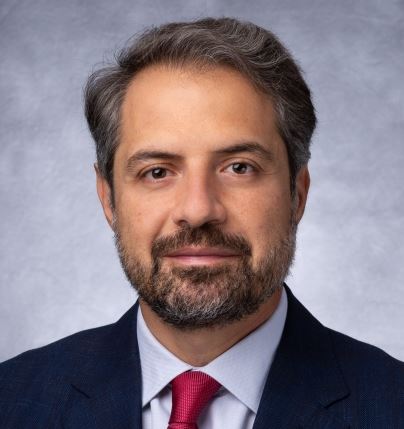
Elias Jabbour, MD, previews the remaining clinical challenges and future directions in acute lymphoblastic leukemia (ALL).
What are the next questions for ALL in 2026? At the SOHO Annual Meeting, we heard from leading experts about where we are today and where the field is going. But what remains unanswered?
First, in Philadelphia chromosome (Ph)-negative ALL, we are weighing whether it is time to move away from chemotherapy. The answer is possibly yes. Frontline trials are needed to determine whether chimeric antigen receptor (CAR) T-cell therapy can reduce or potentially eliminate the need for chemotherapy. This approach holds tremendous promise.
The second question involves older adults with ALL. These patients are often frail and may have poor disease biology and other aggressive features, making chemotherapy a less suitable option. For these patients, the field is moving toward chemotherapy-free regimens that incorporate immunotherapy and potentially frontline CAR T-cell therapy. The coming years will show whether these approaches can improve outcomes.
The third question relates to central nervous system (CNS) relapses. Systemic chemotherapy is effective and immunotherapy has produced excellent results, but CNS relapse can still be a problem. We have seen this among patients with high white blood cell counts and Ph-positive ALL. Once a CNS relapse occurs, it can be difficult to eradicate.
CAR T-cell therapy is a promising option. Data have shown that CAR-T cells can penetrate the CNS, persist, and potentially prevent or control disease in this sanctuary site, further improving outcomes.
Another area to explore is T-cell ALL. Although we have several immunotherapies available for B-cell ALL, we have fewer options for T-cell ALL because of the nature of the disease and challenges such as fratricide and T-cell aplasia.
We are exploring CD7- and CD5-directed CAR T-cell therapies. These approaches are at the beginning of their development, but they hold promise for further improving patient outcomes.
To continue making progress, we need better classification and prognostic systems that can distinguish among disease subsets and help us tailor therapy accordingly. This work is already reflected in the research being presented.
Finally, we have many therapeutic options, but how should we sequence them? Should we use one treatment at a time or combine therapies sequentially? This is an important operational question.
We know that to achieve the best outcomes with CAR T-cell therapy, it should be administered when a patient has measurable residual disease (MRD). Following infusion, we must monitor CAR T-cell expansion and persistence. We must also monitor MRD negativity using next-generation sequencing to determine who may need a transplant and who may not.
The state-of-the-art question today is whether patients still need a transplant after CAR T-cell therapy. With the availability of newer therapies and models that can predict long-term outcomes, we may eventually reach a point at which CAR T-cell therapy is used as a finite consolidation approach rather than as a bridge to transplant.
Significant progress has been made, and the coming years will hopefully bring answers to these questions.
Elias Jabbour, MD, is an editor at SOHO Insider and a professor in the Department of Leukemia in the Division of Cancer Medicine at the University of Texas MD Anderson Cancer Center.
Leave feedback about this