

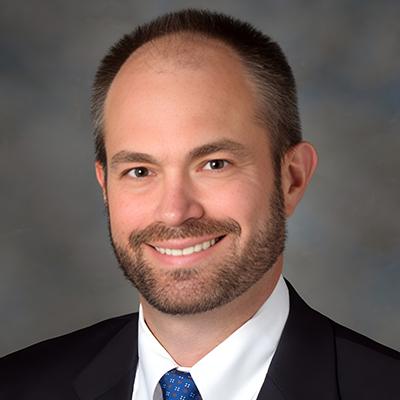
William Wierda, MD, PhD, is a professor of medicine and center medical director for the Department of Leukemia, Division of Cancer Medicine at The University of Texas MD Anderson Cancer Center. For the past 25 years he has focused on CLL research and treatment.
This interview has been edited for length and clarity.
Where did you grow up, and when did you decide you wanted to become a clinician?
I grew up in a Southern California suburb called La Crescenta. I lived there until I went to college. It was a very small, middle-class, homogeneous suburb.
Since I was a kid, as early as I can remember, I was interested in becoming either a doctor, a lawyer, or a teacher. When I was in high school, I volunteered in a local emergency room, which is where I became more interested in medicine and decided I wanted to go to medical school. I attended a premed program at UC Riverside, a city halfway between Los Angeles and Palm Springs in the Southern California desert. After graduating, I moved to Chicago for medical school, where I completed an MD-PhD program in microbiology and immunology and earned my medical degree in 1993.
It was during my time at Riverside that I became interested in immunology. I worked in the lab of an immunologist named Carl Ware, volunteering and learning more about the field. That experience led me to pursue an MD-PhD with a focus in microbiology and immunology.
I was interested in cancer and in the idea of using the immune system to treat it. From early on, I knew I wanted to be a physician-scientist. I did a lot of lab work as an undergraduate and as an MD-PhD student.
After medical school, I completed an internal medicine residency at Duke. I then went to UC San Diego for a hematology-oncology fellowship, where I worked in Tom Kipps’s lab. My interest in chronic lymphocytic leukemia developed through my work with Tom, and that has been the focus of my career ever since.
After my fellowship, I spent two years as an instructor at UC San Diego before being recruited to MD Anderson in Houston. I’ve been at MD Anderson for 25 years and have worked in a variety of areas in CLL treatment development.
What interested you in CLL?
It was the work that I did with Tom Kipps, who is an immunologist and physician-scientist. The immune system in patients with CLL is abnormal because of the presence of the CLL cells. That was where my interest was piqued, because there were unusual features about the disease from an immunological perspective and a unique opportunity to study the immune system.
I was interested in B cells and B-cell biology. My doctoral work was in natural killer cells, and I had interest in recruiting those as cancer therapeutic tools. For the CLL aspect of it, when I was with Tom Kipps, I worked on a vaccine for CLL, which was developed by Tom in his lab. It was based on an immune trigger to stimulate an immune reaction against the CLL cells. That was where my interest in CLL’s uniqueness and the therapeutic opportunities started and grew.
Who were your mentors and how did they help shape your career?
Tom Kipps continues to have a significant impact on my work in CLL, and we continue to collaborate. Michael Keating and Susan O’Brien also influenced me.
At MD Anderson, my mentors included Hagop Kantarjian, whom I’ve worked with closely for many years, and Emil Freireich, the father of the leukemia program at MD Anderson. He was a giant in cancer care and leukemia care and a truly impressive person.
MD Anderson has been a wonderful environment for drug and therapeutic development. It’s a unique institution because it’s large enough to allow faculty to focus on a single disease. That ability to specialize leads to a deep understanding of the disease and puts people in a strong position to develop new treatments and conduct clinical research. You don’t see that in many other places.
It’s a unique feature of MD Anderson because of its size. There’s a critical mass of people with shared expertise, and our leukemia program has grown tremendously over the years. Even when it was smaller, it was a fertile environment for discovery and collaboration, and it’s been a wonderful place to work.
How did your doctoral research shape your approach to medicine?
As a clinician, it gave me a broader perspective and a deeper understanding of biology. It also taught me a different way to approach and think about problems. Clinicians are trained to think differently than scientists, who develop hypotheses, generate new data in the laboratory, and consider alternative explanations.
The PhD training strengthened my critical thinking and hypothesis generation while giving me a deeper understanding of biology. That has been invaluable throughout my career.
It is often said that CLL is now a chronic disease. Because of this label, some might feel it is a field that is no longer worth pursuing. What are your thoughts on where CLL research stands today, and what is the next major challenge that needs to be solved for patients?
You’re completely correct in the sense that the sentiment has shifted about the work being done in CLL because we’ve made tremendous breakthroughs in therapies over the last decade. It has reached the point where most patients diagnosed with CLL will have a normal lifespan, even if they require treatment.
When you think about cancer more broadly, there are other diseases with a greater need for breakthroughs, such as lung cancer, pancreatic cancer, and acute myeloid leukemia. We’ve made tremendous progress in CLL. However, there are still important unmet needs.
One is Richter’s transformation, where CLL transforms into a much more aggressive disease that patients can die from. We still don’t have a good understanding of why it happens in some individuals and not others, and we haven’t made as much progress as we’d like in developing therapies for patients with Richter’s transformation. It affects a relatively small proportion of patients today, but it remains a significant unmet need.
I mentioned that CLL is an interesting disease from an immunological perspective. Patients have an impaired immune system simply because they have CLL, and that immune deficiency doesn’t go away even when they achieve a deep remission. It increases their risk of infections and secondary cancers. Another major unmet need is understanding the mechanisms behind that immune deficiency and developing strategies to restore normal immune function. We now have highly effective treatments that can put the disease into remission. The next challenge is figuring out how to repair the immune system so patients are no longer at increased risk for infections and other cancers. That’s an area I’m focused on now.
Finally, we’ve been very successful in developing therapies. Most patients achieve deep remissions that can last for many years, but those treatments are not yet considered curative. One of the last major hurdles in CLL is achieving a true cure by eliminating all of the leukemia cells so the disease never returns. That’s another area I’m interested in, particularly developing vaccine strategies and other immune-based treatments that could eliminate the remaining disease.
So, there are still important unmet needs in CLL, although the urgency is not what it was in the past or what it is today for cancers such as AML.
Are CLL patients today relatively able to go about their daily lives
and function normally while undergoing treatment?
Yes, our treatments are extremely effective, and they’re extremely well tolerated. We’ve virtually eliminated chemotherapy for treatment of CLL. Most of the treatments that we use are oral agents. Sometimes we’ll add an IV medication. Patients can go about their normal activities. Those who work continue to work and their lifestyle is not significantly impacted by treatment.
What are your favorite hobbies and interests outside of work?
A fun fact: I bought a house about six or seven years ago near Rice University. The house was built in 1934, and it was the home of MD Anderson himself before he died. Working on the house and the yard has become my newest hobby.
My other hobby is my dogs, Chloe and Hope. I’m particularly interested in working with Hope’s breed. She’s a Barbet, a rare French water dog. I’ve become involved with the Barbet Club of America and enjoy learning more about the breed.
I love to fish and take every opportunity I can to get out on the water. I used to ski more, but I don’t as much these days because I’m getting older and don’t want to put myself out of commission.
I also listen to a lot of music and enjoy spending time with family. I don’t have children of my own, but I’ve always been close to my nieces and nephews. My nephew and his wife live down the street with their two-and-a-half-year-old daughter, and they recently welcomed a baby boy. I’m the on-call babysitter, so we spend a lot of time together.
If you could have dinner with any scientist living or deceased, who would it be?
I would like to meet and talk to Einstein.



Leave feedback about this