

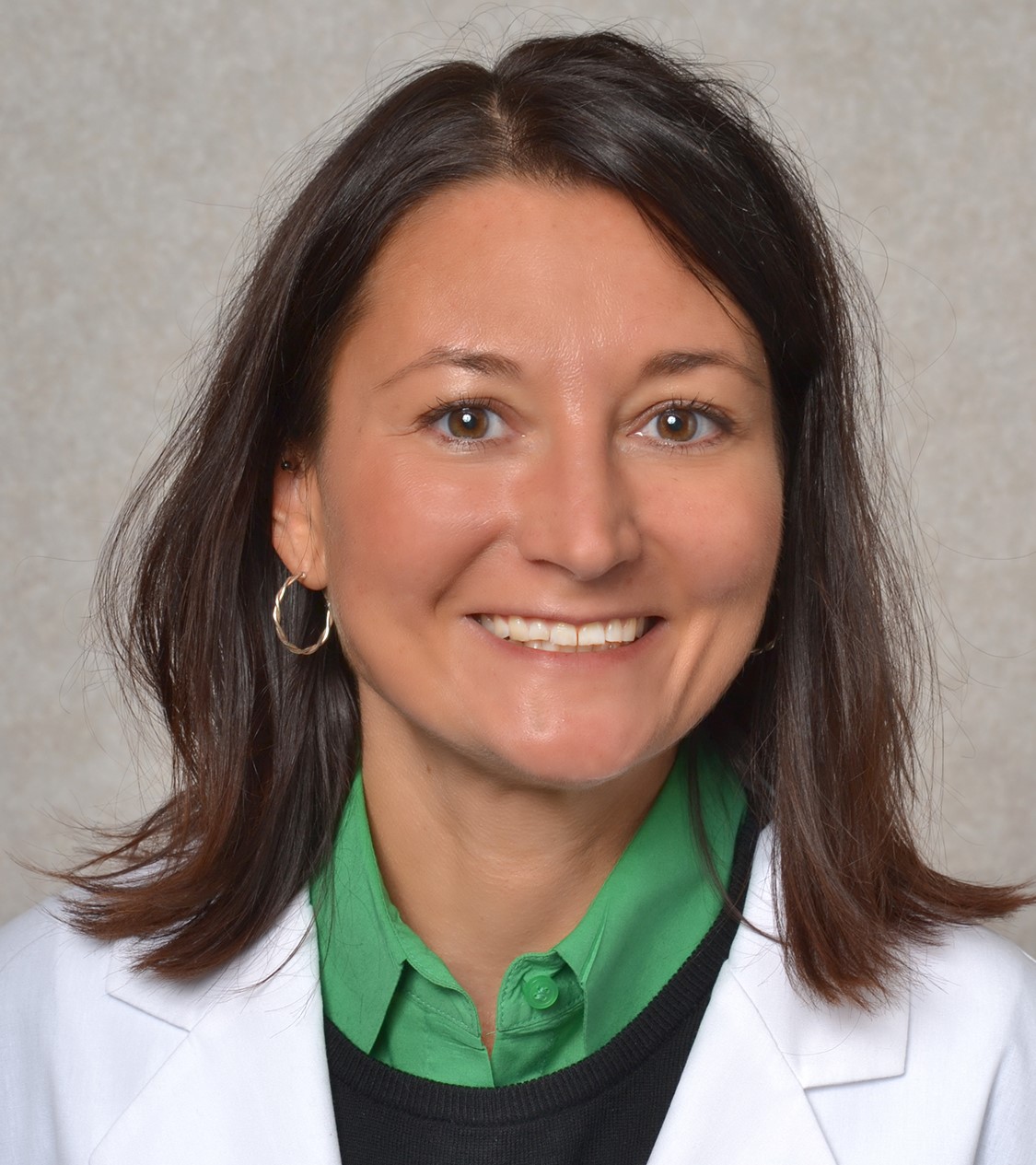
Treatment for mantle cell lymphoma has evolved over the past few years and I am looking forward to a great session this year with fantastic speakers.
Dr. Yucai Wang will kick off the session with a discussion on maximizing the role of BTK inhibition. BTK inhibitors revolutionized the treatment landscape for MCL in the relapsed/refractory setting when the first BTKi, ibrutinib, was approved. Since that time, we have seen the approval of two second generation BTKi, acalabrutinib and zanubrutinib, which have less off-target kinase inhibition leading to improved toxicity profiles.
Treatment with single agent BTKi had long been the standard, although small trials suggested doublet and triplet combinations could improve outcomes, and eventually a randomized trial (SYMPATICO), showed benefit of the addition of BCL2 inhibition.
After years of awaiting results from clinical trials that included BTKi in frontline treatment combinations, the ECHO trial led to the FDA’s approval of the first BTKi in combination with chemoimmunotherapy. How we best incorporate BTKi to provide the greatest benefit to patients – in combination with immunotherapy, targeted therapy, or chemotherapy; given as time limited maintenance or given until progression; given as retreatment after time limited – is not known. These are just a few of the questions we have yet to answer and I look forward to hearing Dr. Wang’s approach.
For years – including when I trained and most my time practicing – patients with newly diagnosed MCL deemed fit to tolerate consolidation with autologous stem cell transplant (ASCT) were recommended this treatment after induction chemoimmunotherapy. This approach, while long practiced, was based on a single trial that incorporated ASCT consolidation with CHOP induction.
In the second talk of the session, we will hear from Dr. Brad Kahl about the role of ASCT in the treatment landscape with current therapies.
Two large, randomized studies challenged the role of ASCT in MCL. The TRIANGLE trial evaluated the role of ASCT in the setting of incorporating BTKi into induction and maintenance and found that patients treated with the addition of BTKi did superior to standard treatment and patients treated with the BTKi with elimination of ASCT had improved outcomes over standard treatment, with suggestion that patients with certain high risk disease features may still benefit from the inclusion of ASCT, albeit at the cost of greater toxicity.
The second trial, ECOG 4151, was a randomized trial evaluating the role of consolidation ASCT in patients who achieved undetectable measurable residual disease. This trial was based on the knowledge that patients who were able to achieve a deeper remission going into ASCT had longer time to relapse, suggesting that there may be a population of patients who did not require this additional treatment. Indeed, patients with deep molecular remissions after induction did just as well with rituximab maintenance as those who had consolidation ASCT and rituximab maintenance indicating most patients could be spared the toxicity, time, and expense of ASCT without impacting outcomes.
As we have come to understand more about the biology of this disease, we are able to personalize treatment-based approaches…
Whether or not there is a role for ASCT consolidation in particular patient populations – those with high-risk disease features, without access to BTKi in the frontline treatment and/or who do not achieve a deep molecular remission after induction – is hopefully something Dr. Kahl will answer for us.
MCL remains an incurable disease and despite the significant advances, including improved overall survival, there still exists a need for improved therapies, particularly in patients who are refractory and those with high-risk MCL.
While not completely novel given the approval in other B-cell malignancies, the CD20xCD3 bispecific antibodies have shown very promising activity in MCL. Glofitamab as single agent treatment and mosunetuzumab in combination with the ADC polatuzumab vedotin have been impressive in early trials. Targeting CD19 has shown to be highly effective in MCL and early results of CD19xCD3 bispecific antibodies are also very promising. Speaking of targeting CD19, the ADC loncastuximab has potential as an active agent in MCL.
There are still promising oral therapies as well. The BCL2 inhibitor, sonrotoclax, recently received approval in relapsed/refractory MCL and combination studies are ongoing. The noncovalent BTKi nemtabrutinib is under investigation, with the first noncovalent BTKi pirtobrutinib already approved. Targeting BTK is effective in MCL, and BTK degraders have shown early promise as agents that degrade instead of inhibiting the protein.
Cellular therapy has made a major impact on the treatment for B cell malignancies, and MCL is no different with two approved CD19 directed products. However, there are opportunities for improvement and cellular therapies targeting dual or triple antigens and alternate targets are in development. I am excited to hear Dr. Preetesh Jain’s discussion on promising agents in the pipeline.
I have the distinct privilege of being the last speaker in the session, tasked with a discussion on risk-based approach to treating MCL. As we have come to understand more about the biology of this disease, we are able to personalize treatment-based approaches for patients taking into consideration the best treatment of their disease while limiting toxicity and time on therapy when not indicated. I look forward to seeing you all there!



Leave feedback about this