


As experience with the lymphoma drug glofitamab shows, global oncology trials sometimes fall short on representation of US patients and ethnic diversity. Raising awareness among community oncologists and use of AI for trial matching could help.
By Emily Hayes
When you prescribe a newly approved hematologic oncology drug, you ought to have confidence that it will be both effective and safe for the types of patients you treat and that it fits with the US standard of care.
“It has long been recognized that clinical trial participants should reflect the population for which the health product is intended,” the American Society of Hematology (ASH) explained in its diversity, equity, and inclusion roadmap. “This is important because biological, social, and other variables can affect the way a health product functions in different populations, potentially resulting in different safety and/or efficacy profiles.”
But due to real-world pressures on sponsors, physicians, and patients, there are some formidable barriers to ensuring that drug trials supporting approvals include enough patients from the US and reflect the ethnic diversity of the populations likely to be treated.
The US Food and Drug Administration (FDA)’s rejection last year of Roche/Genentech’s bispecific antibody glofitamab-gxbm (Columvi) in second-line treatment of diffuse large B-cell lymphoma (DLBCL) is an example of what can go wrong with the regulatory reviews of a promising drug
Glofitamab, a bispecific CD20-directed CD3 T-cell engager, received accelerated approval as a single agent for relapsed or refractory (R/R) DLBCL or large B-cell lymphoma arising from follicular lymphoma in 2023, based on a single arm trial that showed strong response rates.
The pivotal STARGLO study testing glofitamab with gemcitabine and oxaliplatin (GemOx) in second-line DLBCL patients not eligible for transplant was lined up to support full approval later on.
But there was good news and bad news in the STARGLO results. Overall, there was a 41% reduction in the risk of death. The European Commission approved the combo for its member countries in April 2025, based on STARGLO. To date, the combination has been approved for the second-line DLBCL indication in more than 50 countries, according to Genentech.
The FDA, however issued a complete response letter in July 2025 for second-line DLBCL.
When US representation falls short
So, what went wrong in the US? It boiled down to regional representation. The study tested Columvi/GemOx against Roche’s rituximab (Rituxan) with GemOx in 274 patients. The overall survival hazard ratios for the test combo versus control were .41 for 161 Asians participating in the study, 1.09 for the 88 Europeans and 2.62 for the 25 North Americans. The study wasn’t powered to detect statistical changes in subgroups, but these analyses can be helpful for looking at trends and other measures like progression-free survival and complete response rate also showed better results for Asian participants.
FDA’s Oncologic Drug Advisory Committee (ODAC) voted 8-1 against approving the new indication—the one yes vote coming from a patient advocate concerned about preserving access and satisfied with the overall result.
The STARGLO study took place at the time of the pandemic, which made enrollment more challenging in the US, according to the manufacturer, but COVID-19 was a global crisis and other regions were able to recruit more patients. Most of FDA’s ODAC members were not able to conclude that the overall result would apply to patients in the US.
That’s certainly not the end of the story. Glofitamab/GemOx is still included as a preferred regimen for second-line DLBCL in National Comprehensive Cancer Network guidelines for B-cell lymphomas, paving the way for continued use and reimbursement. Other studies could bolster glofitamab’s regulatory outlook, like the phase III SKYGLO study of Columvi with polatuzumab vedotin (Polivy) in first-line large B-cell lymphoma.
“For some programs, including Columvi, we have initiated US-dedicated clinical trials to help ensure we are generating evidence that reflects the needs and characteristics of US patients living with the disease,” Genentech said in an emailed statement to SOHO Insider.
Genentech is also testing mosunetuzumab (Lunsumio) in combination with Polivy in the phase III SUNMO study of R/R DLBCL.
“There remains a significant unmet need for people with R/R DLBCL, and Genentech is committed to advancing multiple potential treatment options through an innovative, broad development program,” the company added.
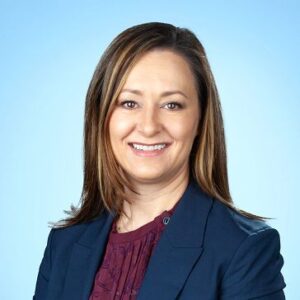
For patients with large B-cell lymphoma, glofitamab can be a very effective, well-tolerated treatment, said Loretta Nastoupil, MD, a hematologist and oncologist at Southwest Oncology in Durango, Colorado.
“I would be grossly disappointed to not have access to it for patients,” Dr. Nastoupil commented in an interview.
Considering the impressive early-stage results in a hard-to-treat population and that physicians in the community were pretty excited, Dr. Nastoupil said that she would have expected that the study would be easy to enroll in the US.
“I do think something positive can be gained from this—we need to revisit why we’re doing a poor job of recruiting American patients on studies,” Dr. Nastoupil said.
How high is the US bar?
In recent years, concerns about the lack of US representation in pivotal clinical trials has been a major issue in reviews of several cancer drugs, including Eli Lilly/Innovent/Biologics’ sintilimab for non-small cell lung cancer and GlaxoSmithKline’s multiple myeloma drug belantomab mafodotin.
The FDA has indicated in public meetings it would like to see those multiregional clinical trials—defined as studies conducted in more than one region under a single protocol—include at least 20% of US participants.
FDA guidance documents related to inclusiveness in clinical trials include the “E17 General Principles for Planning and Design of Multiregional Clinical Trials,” for MRCTs used in global regulatory approval submissions. Designed in line with the International Council of Harmonization (ICH), the guidance advises “ensuring sufficient sample size to be able to evaluate the overall treatment effect, assuming that the treatment effect applies to the entire target population, particularly to the regions included in the trial.”
The US FDA published a complementary guidance specifically on planning, design and analysis of oncology MRCTs in September 2024, noting that the proportion of US participation in MRCTs has been decreasing, which can make it harder to study the treatment effects in US compared to other participants. It advises trial sponsors to enroll an adequately representative subgroup of US participants in an MRCT and that sponsors should achieve enrollment of a population that adequately represents the US population affected with the cancer indication being studied.
The FDA also published guidance on diversity action plans for phase III trials of drugs and devices to improve enrollment of historically underrepresented populations (race, ethnicity, sex, and age) in 2024, meeting the obligations of the Food and Drug Omnibus Reform Act of 2022 (FDORA).
According to an IQVIA analysis of oncology approvals between 2013 and 2017, US enrollment was lower than 20% in one-third of oncology pivotal trials and the average was actually only 8%.
In a blog published in CenterWatch in mid-2025, a WCG Clinical Services executive wrote that her company’s benchmarking data for the past three years showed that of 85 oncology MRCTs in the last three years with 10 or more countries involved, only 8% of participants came from the United States.
US leads global R&D, but China’s on the rise
Meanwhile, FDA commissioner Martin Makary has been warning that China is gaining ground over the US in early drug development.
While China is growing fast and significantly expanding in drug development, the US still leads global R&D, according to a review article in Nature Signal Transduction and Targeted Therapy. However, the article also noted that there are “constraints in the R&D ecosystem, including the high costs of drug development and the lengthy timelines required for clinical trials.”
There’s a conundrum in addressing representation, commented Ray U. Osarogiagbon, MBBS, lead author of an American Society of Clinical Oncology (ASCO) 2025 special report about access to clinical trials in the United States.
“You don’t want to extrapolate and assume that because something worked in a certain homogeneous population elsewhere, that those results will be directly translated into our population,” said Dr. Osarogiagbon, who is director of the multidisciplinary thoracic oncology program and the Thoracic Oncology Research (ThOR) Group at the Baptist Cancer Center, in Memphis, Tennessee.
So caution is important, but on the other hand, there are practical access and drug development issues. Cancer treatment is increasingly personalized with biomarker-directed treatment, so the pool of patients for these highly selective agents is getting smaller. Industry wants to get answers about whether a compound will work quickly, but they need to work within the US clinical trials infrastructure that is slow and bureaucratic, Dr. Osarogiagbon said in an interview.
“Our clinical trials enterprise is relatively inefficient, and especially in recent times with all the constraints of funding, it has become even more so,” Dr. Osarogiagbon said.
Robert Califf, MD, FDA Commissioner from 2015-2017 and 2022-2025, has been addressing the inefficiencies of the US clinical research infrastructure in multiple posts on his Substack account. In one, he noted that the US comprises only 4% of the world’s population, but the majority of profit in the medical products industry is made in the United States.
“While I believe there are reasonable questions about the preferred distribution of clinical trial enrollment across continents and countries for the global medical products industry, the distinct impression I get is that the difficulty and cost of conducting biomedical research in the U.S. is pushing the industry away,” Dr. Califf wrote.
Improving access to patients in communities
Currently, few adults with cancer take part in US trials and they tend to be “younger, healthier and less racially/ethnically and geographically diverse than people seen in clinics,” according to a joint statement from ASCO and the Association of Community Cancer Centers (ACCC).
In an interview, Dr. Califf said that there tends to be a view that patients in the United States don’t want to participate in clinical trials, but surveys suggest they would if they were asked to.
Dr. Califf sees the problem with US enrollment as more of a systems issue—most oncologists work for either a university system or a big practice and are under tremendous financial pressure to provide paid services and to not get distracted by research.
“They’re not masters of their own fate like they used to be,” Dr. Califf said. “And so they’re operating in systems that disincentivize research for the most part, and they need to reorganize and stress professionalism more, which would include research as part of clinical care.”
Experts interviewed for this article also cited challenges for patients getting to academic trial sites where the trials are conducted versus the need for more outreach to patients where the patients are located— in the community.
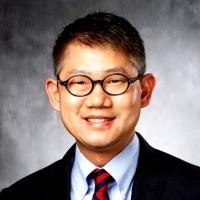
“Many patients don’t necessarily live in large urban centers, near large major medical centers to enroll in clinical trials. So how can we improve access to clinical trials where the patients are at in the community setting?” commented Hans Lee, MD, director of myeloma research at the Sarah Cannon Research Institute (SCRI).
This is the mission of SCRI, to really provide access to cutting-edge trials to patients where they are at and thinking about operational barriers to enrollment and breaking them down, Dr. Lee said. Early in clinical development, sponsors need to be thinking about whether a trial could be accrued not only at major academic centers but also in the community where most people are being treated.
Dr. Lee will be addressing enrollment in clinical trials in a free webinar on September 2, as part of a community oncology brown bag educational series sponsored by SOHO Insider and managed by Southwest Oncology’s Dr. Nastoupil.
Information needs to get to the treating physicians in time for them to make fair and balanced recommendations about cutting-edge treatments, Dr. Nastoupil commented.
Could AI boost access—and efficiency?
In general, research options are not as visible in the community setting and clinical trials become a last resort for very hard to treat patients, said Arturo Loaiza-Bonilla, MD, network chief of hematology and oncology at St. Luke’s University Health Network in Pennsylvania.
In 2015, Dr. Bonilla cofounded a company Massive Bio, which developed algorithms that match patients to oncology and hematology clinical trials worldwide. Among the disease types covered are lymphoma, multiple myeloma, and chronic myeloid leukemia. The goal is to get patients on trials faster and to accelerate drug development overall.
The introduction of generative AI in 2023 supercharged the company’s capabilities.
Physicians or patients can access the service for free, searching over 19,000 oncology clinical trials. Just like food orders can be tracked in an app, patients can be followed in their cancer journey and notified when a trial opens that fits their criteria. Patients need to be matched fast enough for them to get in while they are still eligible and to be offered options in real time, Dr. Loaiza-Bonilla explained in an interview.
Among other partnerships, Massive Bio is working with the American Cancer Society on its trial matching program ACS Acts.
“Millions of patients get diagnosed every year with cancer and we don’t have that many slots available in clinical trials, but many of [those slots] go unfilled,” Dr. Loaiza-Bonillla said.
“We’re able to solve protein folding. Why can’t we solve clinical trial enrollment?” Dr. Loaiza-Bonilla asked.
Massive Bio is aiming to solve the enrollment problem with a patient-centric solution, leveraging AI, he explained. The company offers two platforms, one for clinicians (Dr Arturo AI) and another for patients (Ask Fiona AI), both designed to analyze patient data and match it to clinical trial eligibility.
Ideally, decentralized trial designs will make it possible for trial participants to get lab work and imaging studies close to home. Dr. Loaiza-Bonilla sees positive signs in efforts by the current US administration to support improving healthcare delivery in rural areas. In late 2025, the US Centers for Medicare and Medicaid Services announced plans to award $50 billion to improve rural healthcare delivery in 50 states. This along with other initiatives is a big opportunity to bring trials closer to communities and minimize the financial toxicity of healthcare, he said.
AI promises to help improve inclusiveness of trials, while cutting time and money from drug development, though challenges remain, such as ensuring data privacy, eliminating algorithmic bias risk, evaluating the true fitness of patients, and incorporating a wide range of biomarkers.
“This is a transformational moment when we can use technology to bring trials to community centers in a much more proactive and deeply enabled way,” Dr. Loaiza-Bonilla said. “So that’s my dream, but it’s not futuristic, it’s real [now]. We just need to make it happen at scale.”
Emily Hayes is a freelance journalist based in the California Bay Area. She has more than 25 years of experience writing about medicine across therapeutic areas for healthcare professionals and investors. Among other trade publications, she has written for the Regulatory Affairs Professionals Society’s Regulatory Focus, and pharmaceutical titles Pink Sheet and Scrip.





Leave feedback about this