

These are strange times to be in the health science field. We have our government leadership openly advocating for moving grants away from academia, particularly for institutions and investigators that do not toe the party line. We have prediction markets now wagering on the outcomes of clinical trials. We have public displays of disgracing scientists and public health officials. Where does this end? Where does it lead?
Franz Kafka spoke to the power of narration: “A book must be the axe for the frozen sea inside us.” Well, right about now we need a BIG axe. We need a great story.
I’ve got one.
The theme of SOHO 2026 is “Advancing Care Through Collaborative Science.” There are obviously many challenges in collaborations. There are egos. There are issues of priorities (often pitting shareholder values against human values). There are cultural pressures, given that the prevailing currency seems to emphasize greed and testosterone (“Cooperation is for suckers!”). And while many of us intuit the power and wisdom of the “it takes a village” approach, the reality is that one village idiot can break anything of value to smithereens.
The elevator pitch of our lab’s work is that we study the luck of biology: why some patients respond to therapy, while others don’t. This is an important part of the concept of “precision medicine,” where specific drugs are used according to an individual’s biologic characteristic (in principle, this includes tumor characteristics as well as non-tumor biology, such as the immune system and microbiome).
The “poster child” of precision medicine is chronic myeloid leukemia (CML), where the unique BCR::ABL1 fusion gene provides the target for therapeutic intervention (tyrosine kinase inhibitors [TKIs]) as well as a direct measure of drug activity and disease burden (measurement of the BCR::ABL1 mRNA transcript). Before TKIs, the average lifespan of a CML patient (without allogeneic transplant) was roughly seven years. Now, patients receiving TKI therapy live a normal lifespan. The amazing promise of targeted therapy shown in CML has spawned enormous enthusiasm in the academic, pharmaceutical, and biotech sectors, and sparked the development of the NCI precision medicine initiative in acute myeloid leukemia and myelodysplastic syndromes (myeloMATCH).
Sadly, the biggest component of luck that drives cancer outcomes isn’t genetic or immunologic—it’s where you were born, as your geography determines access to health care. Should we accept this? Should the amazing advances in cancer therapy just be the sole property of those of us lucky enough to be born in wealthy countries (or, indeed, better zip codes)? How do we get “precision medicine” to the millions worldwide who desperately need it? The magic of precision medicine relies on costly medications and complicated diagnostics. How do patients in low-resource areas gain access? Is this daunting challenge impossible to overcome?
The story that follows is a remarkable tale of loss, hope, dogged perseverance, hard work, creativity, coincidences, and—well—luck. It involves (in order of appearance) The Max Foundation, the giant pharmaceutical company Novartis, Fred Hutch, and the diagnostic biotech company Cepheid.
The Max Foundation was created in the late 1990s by Pat Garcia-Gonzalez after the loss of her stepson Maximiliano (Max) to CML in 1991. Two important notes: first, this was before the advent of TKIs, and second, prior to this, Pat had no experience in the health care industry. At first, The Max Foundation was a support and education group for low-resource areas around the world. Think of a shop powered by paper and fax machines. This all changed with the approval of imatinib. Pat reached out to Novartis and came up with a miraculous deal: if she could identify patients with CML who had no access to imatinib, Novartis would provide the drug for free, for life. Thus, came the establishment of one of the most successful global medicine access programs, the Glivec International Patient Assistance Program (GIPAP) in 2001.
My guess is that Novartis did this as an idle gesture of goodwill, figuring that Pat could never get this done. If so, it was a dreadfully bad bet. GIPAP supported tens of thousands of CML patients across the globe, and in 2017, this program evolved into Max Access Solutions, partnering with multiple other pharmaceutical companies to offer access to five other TKIs, including second- and third-generation therapies. The Max partnership network now works in over 75 low- and middle-income countries, currently helping over 28,000 CML patients. Max has established the supply network, physician and patient relationships, drug toxicity reporting, and support for diagnostics and monitoring, and works on patient-centered activities, including educational and travel support. By the way, this is done with a total global staff of around 100. The efficiency of the operation is utterly remarkable.
Our lab’s role in this story stemmed from pure coincidence (luck) and fortune. When The Max Foundation was starting, Pat was having trouble confirming the diagnosis of CML in patients (as I recall, the initial cohort was in El Salvador). A volunteer at Max suggested she give us a call, as he knew we did molecular diagnostics in CML. He happened to know this arcane fact because I had transplanted him for his CML a number of years earlier!
Soon, the Max Foundation was sending us peripheral blood from Salvadoran patients, and after, from patients around the world.
The model of our lab doing all the world’s CML molecular diagnostics was clearly not realistic. Some early attempts to send our home-brew assay to other labs fizzled; it was too technical and too complicated to export to the hospitals serving these patients. Again, fate (luck) intervened.
Cepheid, a company that made simple, cartridge PCR assays for infectious disease (especially bioterrorism agents—much of the mail centers across the land have anthrax testing performed by the Cepheid platform) approached us about developing an automated BCR::ABL1 assay. In an additional piece of luck, one of their lead technicians had to move to Seattle and had no job. Cepheid was willing to embed him into our lab. With him at the helm, we quickly worked with Cepheid to develop the assay. In the last link of the luck chain, the WHO was putting the Cepheid platform into low-resource areas around the globe to use for TB and HIV testing around the same time. Cepheid offered terrific reagent support to Max, and soon, BCR::ABL1 testing was available widely, allowing for a dramatic increase in patients eligible for the Max program. After the launch of the Cepheid assay, we remained active in the cause, starting the Spot on CML program, which offers dried blood spot testing through Max for BCR::ABL1, ABL resistance mutations, and myeloid panel mutations.
So how effective overall is this unique non-profit/big pharma/biotech/academia partnership? Some fun facts, circa 2025:
CML patients supported with treatment in 2025: 31,857 in 76 countries
Pills provided (dispensed) to CML patients in 2025: 432,856,006
Treatment-free remission patients being supported in 2025: 125
Nearly half of all CML patients have been on treatment for 10 years or more
Overall survival for patients on the program is similar to those of high-income countries!
Take a second to reflect on the last mind-blowing bullet. Being diagnosed in with CML in Uganda can be the same as the US—if access to the tools of diagnostics and medicines are possible. The CML success story has driven an expansion of Max’s work, now involving multiple corporate partnerships, and expanding to over a dozen different diseases.
This is a great story that teaches that that enormous obstacles in logistics, politics, and health systems can be overcome. It shows the power of dreaming and doing. It proves that human values can supplant shareholder values. The story goes up, unfolding in tens of thousands of lives every year touched by this program.
An axe has smashed the frozen sea. I urge you all to take up this spirit of driven compassion and get swimming.
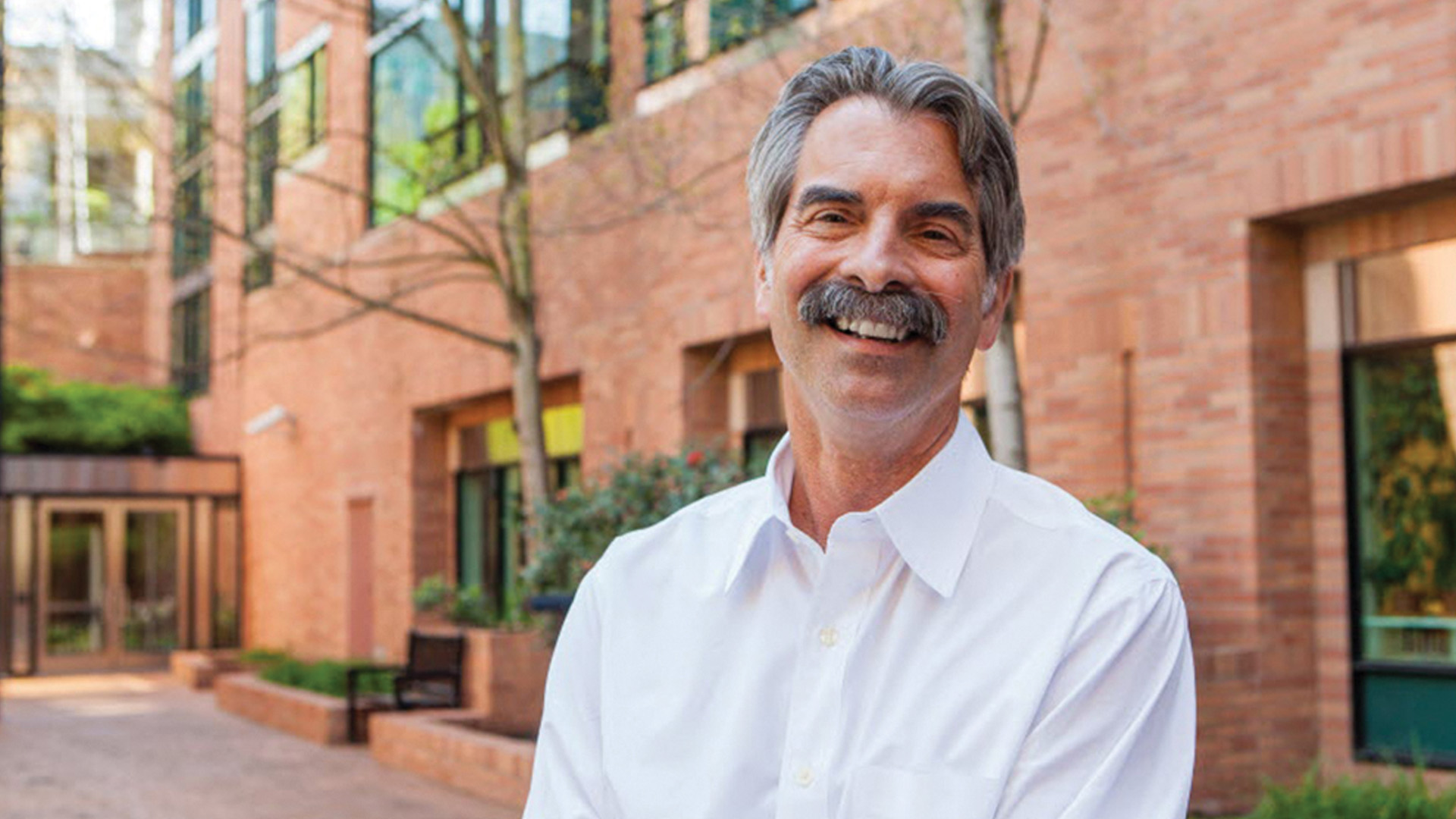
Jerald Radich, MD, is an editor at SOHO Insider, and a professor in the Clinical Research Division at Fred Hutch Cancer Center in Seattle.
Leave feedback about this