

“Learning how to tell a patient they have a life-threatening diagnosis while still leaving them with hope is one of the most important skills in medicine.”
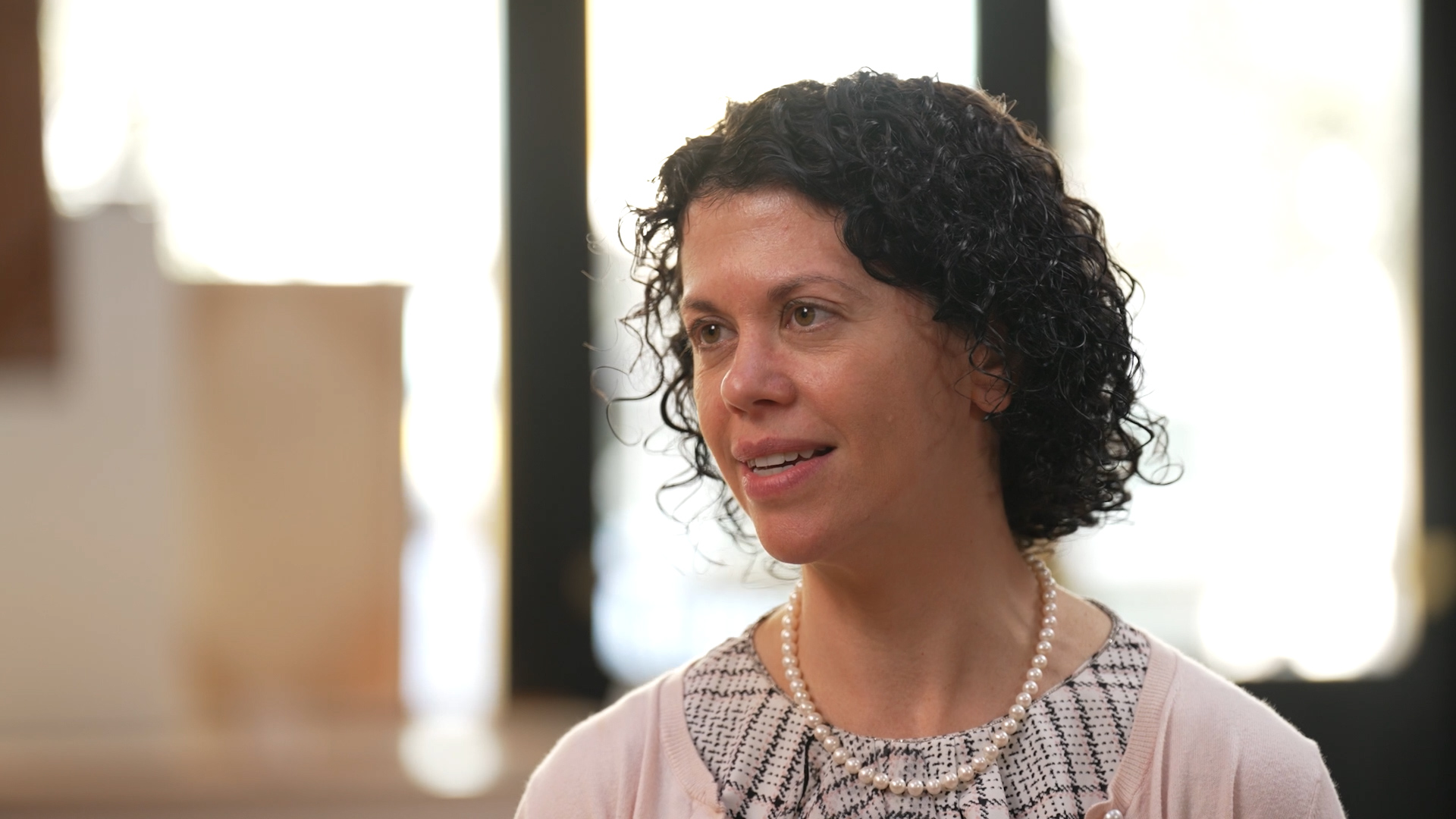
Dr. Hobbs, MPN lead and clinical director for the Adult Leukemia Service at Massachusetts General Hospital, was born in Mexico City, and came to the US for college and for her medical training. In this interview, Dr. Hobbs reflects on how a book about Louis Pasteur awakened her sense of wonder, about the connection between research and medicine, and how she balances honesty and hope in caring for patients.
Why did you decide to become a clinician?
I always knew I wanted to be a doctor. My parents had a series of children’s books, and one was about Louis Pasteur and his discovery of the rabies vaccine.
A big part of that book focused on the immune system, and I thought it was amazing that Pasteur could notice something happening around him, take it to a lab, and develop a vaccine that worked through activating the immune system. I’ve always been fascinated by the connection between medicine and research, even if I didn’t fully understand it at the time.
In 2001, when I was in college, imatinib was approved for CML, and the idea of a targeted therapy for cancer felt like exactly what medicine should be striving for. During medical school, the patients I saw with leukemia were the ones who stayed with me the most.
You make a bond with those patients, and I really found that rewarding from a physician’s perspective. To add to that, throughout my training, I was able to see many medications go from bench to bedside and then see medications getting approved for patients after first using them in clinical trials. It was so rewarding to see the impact these medications made in their lives. Pursuing a career as a leukemia physician had a lot of appealing aspects; I found the intensity of the patient-doctor relationship rewarding and was excited by the amount of progress in research and the development of better targeted agents.
How do you help patients cope with their initial leukemia diagnosis?
Patients are usually completely floored when they first learn they have leukemia. These patients generally come in for something that seems trivial: they might have a fever, or bleeding from the nose or gums. The next thing they know, a leukemia doctor is telling them their white blood cell count is abnormal, and that they need to stay in the hospital for a month.
That initial interaction is so dramatic and life-altering; everyone responds differently. Some go through denial, saying they feel fine or that they can’t stay in the hospital because of other obligations. But there’s no time to wait. If they leave, they could die.
The first week after diagnosis is overwhelming. I often tell patients, “I know we just met, and I know none of this feels real. A few days ago, life was normal. You have to trust me to move things forward while we keep talking through it.”
That first week involves countless tests: bone marrow biopsy, echocardiogram, PICC line placement, discussions about clinical trials, mutations, and treatment options. It’s a flood of information, and patients and families are often in shock or denial as they try to take it all in.
I spend a lot of time talking to patients and their families, especially that first week of diagnosis. Where I think the physician is most valuable is in helping to explain what the patient can expect in the future. Some patients want all the information at once, and some will need a few conversations to process. I think it’s critical to help inform the patient as much as possible to help them cope with what’s ahead.
How do you balance honesty and hope when speaking with your patients?
Learning how to tell a patient they have a life-threatening diagnosis while still leaving them with hope is one of the most important skills in medicine. That’s the art of medicine, and why, I think, many of us become physicians in the first place. Some people have this skill naturally, others develop it, and most of us do both.
I once had a resident who confidently delivered bad news to a patient who happened to be a physician, but the resident didn’t have enough experience to deliver the news with all the information and hope the patient needed. The patient called him back to the room after the resident left and said, “You can never leave a patient’s room without leaving them with some hope.” I’ve carried that with me ever since.
It takes time to develop that balance. Trainees need mentors who model how to speak with patients. I learned a lot by watching others: their phrasing, tone, and empathy. After more than a decade in practice, I’ve grown more comfortable with that discomfort, but it never gets easy.
People may think physicians become hardened, but the longer you do this, the more you understand what lies ahead for your patients. You know what they’re about to endure, and that makes it harder, not easier.
Patients also need to see the human side of their physician. Some cases hit close to home—young patients, parents with small children, for example. I’m a mother myself, so those moments can be emotional. It’s okay to acknowledge those things to patients so that they understand you are really treating them as a person.
Who have been your greatest mentors?
I’ve had many mentors throughout my training, including attendings who were simply exceptional clinicians. During fellowship, I was especially influenced by my mentor, the late Dr. Mark Heaney. He was kind and gentle, able to walk into any room and immediately put patients at ease.
Another mentor, Dr. Miguel-Angel Perales, a BMT physician, helped calm patients and build rapport with his charismatic personality and reassuring demeanor. Everyone uses their personality differently to comfort patients and watching them taught me a lot, as I developed my own style.
How have targeted therapies changed the outlook for patients?
For CML, imatinib was the first targeted therapy for leukemia, transforming it into a chronic disease with life expectancies similar to the general population. Incredibly, imatinib was just the beginning. We now have multiple tyrosine kinase inhibitors, and many patients can discontinue treatment altogether because they remain in deep remission. Targeted therapies, both within and beyond CML, are now a standard part of leukemia care.
I’m an MPN specialist, and during my career I’ve seen the approval of four JAK inhibitors. The first, ruxolitinib (Jakafi), was approved in 2011, followed by three more since then. These drugs have truly impacted how we care for our patients and have helped to significantly ameliorate the debilitating symptoms associated with myelofibrosis.
We are now studying the next generation of targeted agents for MPN, so I think the next decade will be very exciting and bring excellent new therapeutic options for our patients.
How do you approach end-of-life conversations in oncology?
You can’t be an oncologist treating life-threatening illness with medications that are toxic like chemotherapy without also being comfortable talking about death and dying.
Dr. Craig Moskowitz at Memorial Sloan Kettering once told me, “It’s not your fault. It’s not their fault they have cancer. These are the cards we were dealt. Our job is to help patients do the best they can with that situation.”
My approach to end of life has changed with time. In residency, we are all focused on code status and want to know this immediately in case of a catastrophe while the patient is admitted. When you have a longitudinal relationship with a patient, you recognize that these conversations don’t have to happen all at once. These conversations take time, but at the center is open, honest, and compassionate conversation.
Sometimes cancer is curable, and sometimes it isn’t. When it isn’t, part of our job is to talk about death and dying to prepare our patients and their family. It’s important to recognize that these conversations still include hope—whether it’s the hope of being pain free or the hope of dying peacefully at home. Hope doesn’t have to mean cure.
Are you worried about funding or distrust in medicine and science?
In oncology, we are in a unique position because many pharmaceutical companies sponsor our research and fund clinical trials. So, our work isn’t immediately affected by changes in administration or fluctuations in NIH funding. However, I am very concerned about the current political environment that threatens to destabilize the scientific infrastructure that has contributed to countless discoveries in medicine.
“People may think physicians become hardened, but the longer you do this, the more you understand what lies ahead for your patients. You know what they’re about to endure, and that makes it harder, not easier.”
For example, as clinical investigators, we often build correlatives into trials, collecting samples that lab researchers use to study the biology behind treatment responses or resistance. While giving patients access to new therapies is the most important part of a trial, those correlatives are used to confirm hypotheses, understand the disease, or learn why a drug isn’t working and how to make it better. That process depends on collaboration with lab investigators, who rely heavily on NIH funding.
The reason the US leads in drug development, scientific discovery, and medical innovation is its robust funding system for scientific research and innovation. Weakening it threatens that foundation. I am grateful that my work can continue uninterrupted at the moment. However, the current distrust in scientific research and the destabilization of the NIH is very concerning and scary. When you think about how small the NIH budget is compared to the country’s budget, few things have resulted in such dramatic returns on investment. Regardless of each individual’s political affiliation, we can all agree that if we get sick, we want to get the best possible care. Therefore, ensuring the US can continue to engage in the highest level of scientific research is critical so that we can continue to discover new and effective medications to help every American that needs them.
What do you do for fun?
I love spending time with my kids and husband, and I love being active. In the winter, we look forward to going skiing in Vermont, in the summer we love to bike on the Cape or go hiking. Personally, running is my favorite activity as it is a huge part of my mental health and social life.
If you had a different job, what would it be?
I would probably do something related to the environment, working on policies to fight global warming. I would focus on reducing single-use plastics by limiting or banning them, because it’s not just about recycling, it’s about reducing and reusing. I would also want to address food waste and waste in general.
Living or dead, who would you love to have to dinner?
Marie Curie if I had to pick a scientist. Otherwise, Barack Obama.
What’s next for you?
It’s an exciting time in my career, both as an MPN doctor doing clinical trials and as a leukemia clinical director. From an MPN perspective, I’m looking forward to the clinical trials that I have open, which are showing real promise, and to treating patients on those trials.
I am excited about opening several new trials that will cover the full spectrum of MPN from a trial treating JAK2 CHIP to those undergoing transplant. It’s taken a long time to build a program for MPN patients where I can do this kind of work, and I feel very fortunate to be here.
From an institutional standpoint, Mass General is merging with Brigham and Women’s, and our department is expanding. It has been really exciting to interview these promising new fellows who are going to become the attendings of the future. I’m so excited to have new colleagues to work with and to be part of helping the Leukemia Division of Mass General grow.
Gabriela Hobbs, MD, specializes in the care of patients with MPN and leukemias at Mass General Hospital.
Enjoyed this Pathways & Perspectives with Gabriela Hobbs? Read more interviews.



Leave feedback about this